Collagen Benefits: Unlock Radiant Skin and Robust Joints
In the quest for timeless beauty and enduring vitality, one protein stands out as a foundational pillar: collagen. Often hailed as the “glue” that holds our bodies together, collagen is far more than just a buzzword in the wellness industry; it’s an indispensable component of our connective tissues, playing a crucial role in everything from the elasticity of our skin to the flexibility of our joints. At GetLeanPulse.com, we believe in empowering you with science-backed insights to optimize your health, and understanding collagen is a vital step on that journey.
For centuries, humans have sought remedies to defy the visible and internal signs of aging. While myriad products and practices promise miraculous results, few boast the extensive scientific validation and broad-spectrum benefits associated with collagen. As we age, our body’s natural collagen production begins to decline, leading to the familiar signs of aging: wrinkles, sagging skin, and stiff, aching joints. The good news? Supplementation with high-quality collagen can help counteract these effects, offering a pathway to not just looking younger, but feeling more robust and energetic.
This comprehensive guide will delve deep into the world of collagen, unraveling its intricate mechanisms and exploring its profound benefits for both skin and joint health. We’ll examine the science, discuss different types of collagen and their sources, guide you through choosing the right supplement, and provide practical tips for integrating this powerhouse protein into your daily regimen. Prepare to discover how collagen can be a cornerstone of your health and wellness strategy, helping you maintain a vibrant, active lifestyle for years to come.
What Exactly is Collagen? The Body’s Master Builder
Collagen is the most abundant protein in the human body, accounting for about one-third of its total protein composition. It’s a fibrous, structural protein, meaning its primary role is to provide strength, structure, and elasticity to tissues. Think of it as the scaffolding that supports your body, giving shape and integrity to various organs and systems.
Produced primarily by cells called fibroblasts (in skin and other connective tissues) and chondrocytes (in cartilage), collagen forms strong, insoluble fibers known as collagen fibrils. These fibrils then bundle together to create larger fibers, providing incredible tensile strength. To put its strength into perspective, pound for pound, Type I collagen is stronger than steel!
The Many Types of Collagen
While over 28 different types of collagen have been identified, a few types are particularly prevalent and crucial for human health:
- Type I: The most abundant type, found in skin, tendons, ligaments, bones, and organs. It provides tensile strength and is essential for wound healing and tissue repair.
- Type II: Primarily found in cartilage, the flexible connective tissue that cushions our joints. It provides resistance to pressure and is crucial for joint health.
- Type III: Often found alongside Type I, particularly in skin, blood vessels, and internal organs. It provides structure and elasticity, especially in rapidly growing tissues.
- Type V: Found in hair, cell surfaces, and the placenta.
- Type X: Involved in bone formation and cartilage development.
Understanding these primary types is key when considering collagen supplementation, as different types offer targeted benefits.
Where is Collagen Found in the Body?
Collagen is ubiquitous throughout the body, performing vital roles in:
- Skin: Provides firmness, elasticity, and hydration, preventing wrinkles and sagging.
- Bones: Forms the organic matrix of bone, providing flexibility and strength.
- Cartilage: The main component of cartilage, ensuring smooth joint movement and shock absorption.
- Tendons and Ligaments: Connects muscles to bones (tendons) and bones to bones (ligaments), providing strength and stability to joints.
- Blood Vessels: Helps maintain the structural integrity of artery walls.
- Muscles: Part of the connective tissue within muscles.
- Digestive System: Supports the integrity of the gut lining.
The widespread presence and function of collagen underscore its fundamental importance to overall health and well-being. A decline in its production or quality can have far-reaching effects, impacting everything from our appearance to our mobility.

Collagen and Skin Health: The Fountain of Youth Within
When it comes to maintaining a youthful complexion, collagen is undeniably the star player. It’s the primary structural protein in the dermis, the middle layer of your skin, where it forms a dense, organized network of fibers. This network is what gives skin its firmness, elasticity, and ability to retain moisture.
The Role of Collagen in Skin Structure
Imagine your skin as a mattress. The springs are the collagen fibers, providing support and structure, while the padding is elastin (for flexibility) and hyaluronic acid (for hydration). Together, these components form the extracellular matrix, a complex scaffolding that keeps your skin plump, smooth, and resilient. Collagen fibers are incredibly strong and interwoven, forming a mesh-like structure that resists stretching and sagging, helping to maintain the skin’s youthful contours.
Furthermore, collagen plays a crucial role in cell renewal and the skin’s natural repair processes. It helps to anchor skin cells and provides a framework for new cell growth, contributing to a healthy, vibrant complexion.
Signs of Collagen Loss in Skin
Unfortunately, starting in our mid-20s, the body’s natural collagen production begins to decline by about 1% per year. This decline accelerates with age, and is exacerbated by factors like sun exposure, smoking, pollution, and poor diet. The visible signs of this collagen depletion are all too familiar:
- Wrinkles and Fine Lines: As the collagen network weakens, the skin loses its structural support, leading to creases and folds.
- Sagging Skin: Reduced elasticity and firmness cause the skin to lose its tautness, particularly around the jawline, neck, and cheeks.
- Dryness and Dullness: Collagen contributes to the skin’s ability to retain moisture. A decline can lead to drier, less radiant skin.
- Reduced Elasticity: The skin becomes less resilient and takes longer to bounce back after stretching.
- Thinner Skin: The dermal layer thins, making the skin more fragile and prone to damage.
How Collagen Supplementation Benefits Skin
The good news is that numerous scientific studies suggest that supplementing with collagen, particularly hydrolyzed collagen (collagen peptides), can effectively combat these signs of aging by supporting the skin from within.
1. Reduces Wrinkles and Fine Lines
By providing the building blocks for new collagen production, supplements help to strengthen the dermal matrix. This can lead to a noticeable reduction in the depth and visibility of wrinkles and fine lines, particularly around the eyes and mouth. Studies have shown significant improvements in skin texture and smoothness.
2. Improves Skin Elasticity and Firmness
Collagen supplementation helps to restore the skin’s natural elasticity and firmness. As the collagen network becomes more robust, the skin regains its ability to resist sagging and maintain a more lifted, youthful appearance. Participants in clinical trials often report feeling their skin is “firmer” or “more supple.”
3. Enhances Hydration and Moisture Retention
Collagen has a remarkable ability to bind water, acting as a natural humectant. By boosting collagen levels, supplements can improve the skin’s internal hydration, leading to a plumper, more dewy complexion. Better hydration also helps to smooth out fine lines and gives the skin a healthier glow.
4. Promotes a Youthful Glow and Even Skin Tone
Improved skin structure, elasticity, and hydration collectively contribute to a more radiant and even-toned complexion. Healthy collagen production supports the skin’s natural regenerative processes, helping to diminish dullness and promote a vibrant glow.
5. Aids in Wound Healing and Scar Reduction
Collagen is critical for all stages of wound healing, from clotting to tissue remodeling. By providing ample building blocks, collagen supplements can support faster and more efficient wound repair, potentially leading to less noticeable scarring. This makes it beneficial not just for injuries, but also for maintaining overall skin integrity.
6. Protection Against Environmental Damage (Indirectly)
While collagen doesn’t directly block UV rays, strengthening the skin’s underlying structure can make it more resilient against environmental stressors. A healthy collagen matrix can better withstand oxidative stress and inflammation caused by factors like UV radiation and pollution, which are known to accelerate collagen degradation.
Scientific Evidence for Skin Benefits
The scientific community has increasingly recognized the efficacy of collagen supplementation for skin health. Numerous randomized, placebo-controlled trials have demonstrated significant improvements. A meta-analysis published in the Journal of Drugs in Dermatology, for instance, reviewed several studies and concluded that hydrolyzed collagen supplementation significantly increased skin elasticity, hydration, and dermal collagen density, while also reducing wrinkles. Another review in the International Journal of Dermatology highlighted similar findings, particularly for fine lines and skin hydration after consistent use for 8-12 weeks.
The key is often the form of collagen: hydrolyzed collagen, also known as collagen peptides, is broken down into smaller, more bioavailable peptides. These peptides are absorbed into the bloodstream and signal the body’s fibroblasts to produce more of its own collagen, elastin, and hyaluronic acid, effectively kickstarting the skin’s natural regenerative processes.
Collagen and Joint Health: Keeping You Moving Freely
Beyond its aesthetic benefits, collagen is a powerhouse for joint health, providing the structural integrity necessary for smooth, pain-free movement. As we age, or due to factors like intense physical activity and injury, the collagen in our joints can degrade, leading to stiffness, pain, and reduced mobility.
The Crucial Role of Collagen in Joints
Our joints are complex structures designed for movement and shock absorption. Collagen is central to their function:
- Cartilage: The smooth, rubbery tissue that covers the ends of bones in a joint, allowing them to glide over each other effortlessly. Type II collagen is the primary structural component of cartilage (making up about 60% of its dry weight), providing its strength and elasticity.
- Tendons: Strong, fibrous cords that connect muscles to bones. They are rich in Type I collagen, which gives them their incredible tensile strength.
- Ligaments: Tough, elastic bands of connective tissue that connect bones to other bones, providing stability to joints. Like tendons, ligaments are predominantly composed of Type I collagen.
- Synovial Fluid: While not collagen itself, healthy cartilage (supported by collagen) helps maintain the composition and lubrication properties of synovial fluid, which nourishes and lubricates the joint.
In essence, collagen acts as the shock absorber and the structural framework for your joints. It allows for flexibility, reduces friction, and helps distribute mechanical stress across the joint surfaces.
Understanding Joint Deterioration
The natural aging process, coupled with years of wear and tear, takes a toll on our joints. This often manifests as:
- Osteoarthritis (OA): The most common form of arthritis, characterized by the breakdown of cartilage. As cartilage erodes, bones rub against each other, leading to pain, swelling, stiffness, and loss of motion. Collagen degradation is a hallmark of OA.
- Joint Pain and Stiffness: Even without full-blown OA, a decline in collagen can lead to less resilient cartilage and connective tissues, resulting in general aches, pains, and stiffness, especially in the morning or after periods of inactivity.
- Reduced Mobility: As joints lose their smooth cushioning and structural integrity, range of motion can decrease, impacting daily activities and quality of life.
- Increased Risk of Injury: Weaker tendons and ligaments are more susceptible to strains and tears.
The body’s ability to repair and regenerate cartilage diminishes with age, making it increasingly difficult to keep up with the rate of collagen breakdown.
How Collagen Supplementation Supports Joints
Just as with skin, collagen supplementation offers a promising avenue for supporting joint health and mitigating the effects of aging and wear and tear.
1. Reduces Joint Pain and Stiffness
Numerous studies have shown that collagen peptides can significantly reduce joint pain, especially in individuals with osteoarthritis. By providing the raw materials for cartilage repair and potentially reducing inflammation, collagen can ease discomfort and improve overall joint comfort.
2. Improves Joint Function and Mobility
With less pain and improved cartilage integrity, individuals often experience better joint function and an increased range of motion. This translates to greater ease in performing daily tasks, exercising, and maintaining an active lifestyle.
3. Supports Cartilage Regeneration and Repair
When collagen peptides are ingested, they are absorbed and delivered to the cartilage. Here, they can stimulate chondrocytes (cartilage cells) to produce more extracellular matrix components, including Type II collagen and proteoglycans. This helps to rebuild and repair damaged cartilage, slowing down its deterioration.
4. Anti-Inflammatory Effects
Some research suggests that collagen peptides may possess anti-inflammatory properties, which can be beneficial in conditions like osteoarthritis where chronic inflammation plays a significant role in joint damage. By reducing inflammation, collagen can contribute to pain relief and a healthier joint environment.
5. May Slow Progression of Osteoarthritis
While not a cure, consistent collagen supplementation has been shown in some studies to slow the progression of cartilage degradation in osteoarthritis, potentially delaying the need for more invasive treatments and improving long-term joint health outcomes.
6. Strengthens Tendons and Ligaments
For athletes and active individuals, collagen’s role in strengthening tendons and ligaments is paramount. By providing the necessary building blocks, collagen can enhance the resilience of these connective tissues, potentially reducing the risk of injuries and supporting faster recovery.
Scientific Backing for Joint Benefits
The evidence supporting collagen for joint health is robust. A comprehensive review published in the Journal of the International Society of Sports Nutrition found that collagen supplementation effectively reduced joint pain in athletes and active individuals. Another landmark study published in Osteoarthritis and Cartilage demonstrated that collagen hydrolysate significantly reduced pain and improved joint function in patients with knee osteoarthritis.
For joint-specific benefits, Type II collagen is particularly relevant. Studies on undenatured Type II collagen (UC-II), which works through an immune-mediated mechanism in the gut, have shown impressive results in reducing pain and improving function in osteoarthritic knees at much lower doses than hydrolyzed collagen. Hydrolyzed collagen (often Type I and III) also benefits joints by providing raw materials for all connective tissues, including cartilage.
Types of Collagen Supplements and Their Sources
Navigating the world of collagen supplements can be daunting due to the variety of types and sources available. Understanding these distinctions is crucial for choosing the product that best suits your needs.
1. Hydrolyzed Collagen / Collagen Peptides
This is by far the most common and versatile form of collagen supplement. “Hydrolyzed” means the collagen has undergone a process called hydrolysis, where the long protein chains are broken down into smaller amino acid sequences called peptides. This process makes the collagen highly bioavailable, meaning it’s easily absorbed and utilized by the body.
- Benefits: Excellent for skin, hair, nails, and general connective tissue support. Also beneficial for joint and bone health.
- Characteristics: Typically dissolves easily in hot or cold liquids, tasteless, and odorless.
- Sources:
- Bovine (Cow): Derived from the hides of cows. Rich in Type I and Type III collagen, making it excellent for skin, hair, nails, bones, and muscles.
- Marine (Fish): Sourced from fish skin and scales. Primarily Type I collagen. Often considered superior for skin benefits due to its smaller peptide size and high bioavailability.
- Chicken: Primarily Type II collagen, making it particularly effective for joint and cartilage health. Often found in specific joint support formulas.
2. Undenatured Type II Collagen (UC-II)
Unlike hydrolyzed collagen, undenatured (or native) Type II collagen is processed at a lower temperature, preserving its triple helix structure. It works differently from hydrolyzed collagen; instead of providing building blocks, UC-II is thought to work through an immune-modulating mechanism in the gut. Small doses can help “re-educate” the immune system to stop attacking the body’s own cartilage, which is beneficial in autoimmune conditions like rheumatoid arthritis, and also in osteoarthritis by reducing inflammation and supporting cartilage repair.
- Benefits: Specifically targets joint pain, stiffness, and cartilage health.
- Characteristics: Effective in very small doses (typically 40mg per day).
- Source: Primarily derived from chicken sternum cartilage.
3. Gelatin
Gelatin is essentially cooked collagen. It’s partially hydrolyzed, meaning the protein strands are shorter than raw collagen but longer than collagen peptides. It forms a gel-like consistency when mixed with cold water and is often used in cooking (e.g., Jell-O, gummies, thickening agents).
- Benefits: Offers similar benefits to hydrolyzed collagen but is less efficiently absorbed. Good for gut health and culinary uses.
- Characteristics: Only dissolves in hot liquids and gels as it cools.
- Sources: Bovine, porcine (pork).
4. Eggshell Membrane Collagen
Derived from the membrane found inside eggshells, this source naturally contains a blend of Type I, V, and X collagen, along with other beneficial compounds like elastin, hyaluronic acid, chondroitin sulfate, and glucosamine.
- Benefits: Comprehensive support for joint health, connective tissue, and skin.
- Characteristics: A newer, increasingly popular source.
5. “Vegan” or “Plant-Based” Collagen
It’s important to clarify that true collagen is only found in animal products. Vegan “collagen” supplements do not contain actual collagen. Instead, they are formulated with plant-derived ingredients that are known to support the body’s natural collagen production. These “collagen builders” typically include:
- Amino Acids: Proline, Glycine, Hydroxyproline (the main building blocks of collagen).
- Vitamin C: Essential cofactor for collagen synthesis.
- Minerals: Zinc, Copper, Manganese (involved in collagen formation).
- Botanicals: Silica (from bamboo extract), antioxidants.
While these ingredients can certainly support your body’s collagen-producing machinery, they do not provide collagen directly. For those who avoid animal products, these are excellent alternatives to support internal collagen synthesis.
When selecting a supplement, consider your primary health goals. For comprehensive skin, hair, and nail benefits, as well as general joint support, a high-quality hydrolyzed collagen (bovine or marine, rich in Type I and III) is usually the best choice. For targeted joint health, especially for osteoarthritis, undenatured Type II collagen or a blend containing it might be more appropriate.
Choosing the Right Collagen Supplement: A Buyer’s Guide
With a plethora of collagen products flooding the market, selecting the right one can feel overwhelming. Here’s what to look for to ensure you’re getting a high-quality, effective supplement:
1. Prioritize Hydrolyzed Collagen (Collagen Peptides)
For optimal absorption and utilization by the body, always opt for hydrolyzed collagen. This form ensures that the collagen molecules are broken down into smaller peptides, which can be readily absorbed into the bloodstream and delivered to the tissues where they’re needed. Look for “hydrolyzed collagen,” “collagen peptides,” or “collagen hydrolysate” on the label.
2. Consider the Type of Collagen and Source
- For Skin, Hair, Nails, Bones, and General Health: Bovine collagen (Type I & III) or marine collagen (Type I) are excellent choices. Marine collagen is often praised for its superior absorption and benefits specifically for skin. Look for “grass-fed” and “pasture-raised” for bovine, and “wild-caught” for marine to ensure purity and ethical sourcing.
- For Targeted Joint and Cartilage Health: Look for products containing Type II collagen, often derived from chicken sternum. Undenatured Type II collagen (UC-II) is particularly effective for specific joint conditions at low doses.
- For Comprehensive Connective Tissue Support: Some supplements offer blends of multiple collagen types (e.g., Types I, II, III, V, X) from various sources, such as bovine, chicken, and eggshell membrane. These can provide a broader spectrum of benefits.
3. Look for Purity and Quality Certifications
- Third-Party Testing: Reputable brands often have their products tested by independent third-party labs to verify purity, potency, and absence of contaminants (heavy metals, pesticides, allergens).
- Non-GMO and Allergen-Free: Check for labels indicating non-GMO, gluten-free, dairy-free, and soy-free if you have dietary sensitivities.
- Clean Label: Avoid products with artificial sweeteners, colors, flavors, or unnecessary fillers.
4. Form and Versatility
Collagen supplements come in various forms:
- Powder: The most popular and versatile form. It can be easily mixed into hot or cold beverages (coffee, smoothies, water) and incorporated into recipes. Look for powders that dissolve easily without clumping.
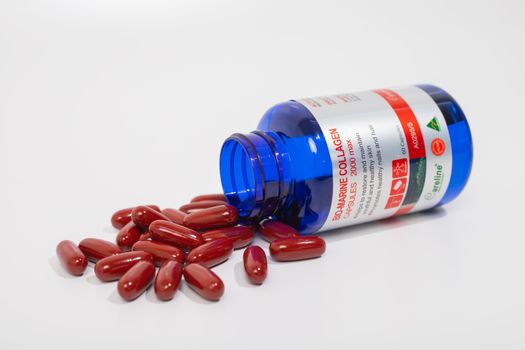
- Capsules/Pills: Convenient for those who prefer not to mix powder. However, you often need to take several capsules to reach an effective dose.
- Liquid: Pre-mixed liquid collagen can be convenient but may contain added sugars or artificial ingredients.
5. Consider Additional Beneficial Ingredients
Some collagen supplements are fortified with other ingredients that enhance collagen synthesis or offer synergistic benefits:
- Vitamin C: Absolutely essential for the body’s natural collagen production. If your supplement doesn’t include it, ensure you’re getting enough from your diet or a separate supplement.
- Hyaluronic Acid: Known for its exceptional moisture-retaining properties, it works synergistically with collagen for skin hydration and joint lubrication.
- Biotin: Often included for additional hair and nail support.
- Glucosamine & Chondroitin: Common joint support ingredients that complement collagen’s benefits.
6. Dosage and Consistency are Key
Follow the recommended dosage on the product label. For hydrolyzed collagen, typical daily doses range from 10-20 grams. For UC-II, it’s usually much lower, around 40mg. Consistency is paramount; collagen benefits accumulate over time, so regular daily intake for at least 8-12 weeks is necessary to see noticeable results.
Integrating Collagen into Your Diet and Lifestyle
Incorporating collagen into your daily routine is simpler than you might think, and optimizing your lifestyle can further enhance its benefits.
Dietary Sources of Collagen and Collagen Boosters
While direct collagen supplementation is highly effective, you can also support your body’s collagen levels through diet:
- Bone Broth: Made by simmering animal bones and connective tissues for extended periods, bone broth is a rich source of gelatin (cooked collagen), amino acids, and minerals.
- Skin-on Chicken and Fish: The skin of poultry and fish contains significant amounts of collagen.
- Organ Meats: Liver and other organ meats are packed with nutrients that support collagen synthesis.
- Vitamin C-Rich Foods: Bell peppers, citrus fruits, berries, broccoli, and leafy greens are crucial. Vitamin C is a co-factor for the enzymes that synthesize collagen. Without it, collagen production cannot occur efficiently.
- Amino Acid-Rich Foods: Collagen is made of specific amino acids (glycine, proline, hydroxyproline). Ensure adequate intake of protein from sources like meat, poultry, fish, eggs, and legumes.
- Copper-Rich Foods: Copper is another essential mineral involved in collagen formation. Found in nuts, seeds, leafy greens, and dark chocolate.
- Antioxidant-Rich Foods: Berries, colorful vegetables, green tea. Antioxidants protect existing collagen from degradation caused by free radicals.
Easy Ways to Supplement with Collagen Powder
The versatility of hydrolyzed collagen powder makes it easy to integrate into your daily routine:
- Morning Coffee/Tea: Stir a scoop into your hot beverage; it dissolves seamlessly and is virtually tasteless.
- Smoothies: A perfect addition to your breakfast or post-workout smoothie for an extra protein boost.
- Water or Juice: Simply mix with water or your favorite juice for a quick and easy supplement.
- Oatmeal or Yogurt: Stir into your morning oatmeal or yogurt for a nutritious boost.
- Soups and Stews: Add to warm soups, stews, or broths to enhance their nutritional profile.
- Baking: Incorporate into baked goods like muffins, pancakes, or energy bites.
Lifestyle Factors to Boost Natural Collagen Production and Preserve Existing Collagen
While supplements provide a direct source, your lifestyle choices significantly impact your body’s ability to produce and maintain collagen:
- Sun Protection: UV radiation is one of the biggest culprits of collagen degradation. Use broad-spectrum sunscreen, wear protective clothing, and seek shade.
- Stay Hydrated: Drinking plenty of water keeps all your tissues, including skin and cartilage, well-hydrated and functioning optimally.
- Balanced Diet: A diet rich in whole foods, antioxidants, vitamins, and minerals provides the necessary co-factors and building blocks for collagen synthesis.
- Avoid Sugar and Refined Carbs: Excessive sugar intake can lead to a process called glycation, where sugar molecules attach to proteins (like collagen), forming advanced glycation end products (AGEs). AGEs damage collagen, making it stiff and brittle.
- Quit Smoking: Smoking significantly impairs collagen production and accelerates its breakdown, leading to premature aging of the skin and other tissues.
- Limit Alcohol Intake: Excessive alcohol consumption can dehydrate the skin and deplete essential nutrients needed for collagen synthesis.
- Get Adequate Sleep: Your body repairs and regenerates tissues, including collagen, during sleep. Aim for 7-9 hours of quality sleep per night.
- Manage Stress: Chronic stress can lead to increased cortisol levels, which can negatively impact collagen production. Practice stress-reducing techniques like meditation, yoga, or deep breathing.
- Regular Exercise: Weight-bearing exercises and activities that promote joint movement help nourish cartilage and stimulate collagen production in connective tissues.
Potential Side Effects and Precautions
Collagen supplements are generally considered safe for most people, with a low incidence of side effects. However, it’s always wise to be aware of potential reactions and consult with a healthcare professional if you have concerns.
Common Side Effects (Rare and Mild)
- Digestive Issues: Some individuals may experience mild digestive upset, such as bloating, gas, or a feeling of fullness. This is often alleviated by starting with a lower dose and gradually increasing it, or by taking collagen with food.
- Unpleasant Taste: While most hydrolyzed collagen powders are tasteless, some people might detect a slight residual taste, particularly with marine collagen. Mixing it with flavored beverages can help.
Allergic Reactions
As collagen is derived from animal sources, individuals with allergies to those sources should exercise caution:
- Fish/Shellfish Allergy: Avoid marine collagen.
- Beef Allergy: Avoid bovine collagen.
- Chicken/Egg Allergy: Avoid chicken collagen or eggshell membrane collagen.
Always check the source of collagen on the product label and if you have known allergies, consult your doctor before starting any new supplement.
Other Considerations
- Pregnancy and Breastfeeding: While no significant adverse effects have been reported, there is limited research on collagen supplementation during pregnancy and breastfeeding. It’s always best to consult your doctor before taking any supplements during these periods.
- Medical Conditions and Medications: If you have a pre-existing medical condition (especially kidney disease, as collagen is a protein load) or are taking medications, discuss collagen supplementation with your healthcare provider.
- Quality Control: Choose reputable brands that provide third-party testing to ensure the product is free from contaminants like heavy metals, which can be a concern with animal-derived products.
For the vast majority of users, collagen supplementation is a safe and effective way to support skin and joint health. Listening to your body and choosing a high-quality product are key.
Conclusion: Embrace
Photo by Madalina Enache on Pexels