Best Cardio for Fat Loss Beginners: Your Ultimate Guide
Embarking on a fat loss journey can feel overwhelming, especially when you’re just starting out. The fitness world is awash with conflicting advice, intense workout videos, and promises of quick fixes. But at its core, sustainable fat loss is about creating a calorie deficit and building healthy habits that you can maintain long-term. And when it comes to burning calories and boosting your overall health, cardio is king – especially for beginners.
At GetLeanPulse.com, we believe in empowering you with practical, science-backed information that makes your fitness goals achievable. This comprehensive guide will cut through the noise, providing you with everything you need to know about the best cardio for fat loss beginners. We’ll cover the ‘what,’ ‘why,’ and ‘how’ of effective cardio, introduce you to beginner-friendly exercises, help you structure a sustainable program, and address common pitfalls. By the end, you’ll feel confident and motivated to take those crucial first steps towards a leaner, healthier you.
Understanding Cardio for Fat Loss: The Fundamentals
Before we dive into specific exercises, it’s essential to understand what cardio is and how it contributes to fat loss. This foundational knowledge will help you make informed decisions and get the most out of your efforts.
What Exactly is Cardio?
Cardiovascular exercise, often shortened to “cardio” or “aerobics,” refers to any physical activity that raises your heart rate and keeps it elevated for a sustained period. It works your cardiovascular system – your heart, lungs, and blood vessels – making them stronger and more efficient. Think of it as a workout for your heart muscle!
The benefits of regular cardio extend far beyond just burning fat:
- Improved Heart Health: Strengthens your heart, reducing the risk of heart disease and stroke.
- Increased Lung Capacity: Helps your lungs deliver oxygen more efficiently throughout your body.
- Enhanced Mood: Releases endorphins, natural mood elevators that can reduce stress and anxiety.
- Better Sleep Quality: Regular exercise can help you fall asleep faster and enjoy deeper, more restful sleep.
- Boosted Energy Levels: Paradoxically, expending energy through exercise can leave you feeling more energized.
- Reduced Risk of Chronic Diseases: Helps manage blood sugar, blood pressure, and cholesterol levels.
How Cardio Contributes to Fat Loss
The primary mechanism by which cardio aids fat loss is through calorie expenditure. To lose fat, you need to create a calorie deficit, meaning you burn more calories than you consume. Cardio is an effective way to increase the “calories out” side of this equation.
When you engage in cardio, your body uses stored energy (glycogen from carbohydrates and fat) to fuel your muscles. The longer and more intensely you exercise, the more calories you burn. Over time, this consistent calorie burning contributes to a significant deficit, leading to fat loss.
Additionally, cardio can contribute to what’s known as the “Excess Post-exercise Oxygen Consumption” (EPOC), often called the “afterburn effect.” While you burn calories during your workout, your body continues to burn calories at an elevated rate for some time afterward as it recovers and returns to its pre-exercise state. While EPOC is more pronounced with higher-intensity cardio, even moderate activities contribute to it to some degree.
Intensity vs. Duration: Finding Your Sweet Spot
When it comes to cardio, you’ll often hear about different intensity levels. For beginners, understanding these can help you choose the right approach:
- Low-Intensity Steady-State (LISS) Cardio: This involves maintaining a steady, moderate pace for a longer duration (e.g., brisk walking, light jogging, cycling). You should be able to hold a conversation comfortably. LISS is excellent for beginners because it’s less taxing on the body, has a lower risk of injury, and is easy to sustain. It primarily uses fat as fuel during the exercise itself.
- High-Intensity Interval Training (HIIT): This involves short bursts of intense exercise followed by brief recovery periods. While incredibly effective for burning calories and boosting EPOC, HIIT can be very demanding and is generally not recommended as the *starting point* for absolute beginners. We’ll discuss how to safely introduce modified HIIT later.
For beginners, the focus should almost always be on LISS cardio to build a foundational level of fitness, improve cardiovascular health, and minimize the risk of injury or burnout. Consistency with LISS will yield far better results than sporadic, overly intense workouts.
<

>
Key Principles for Beginner Cardio for Fat Loss
Starting a new exercise routine can be exciting, but it’s crucial to approach it with a strategy that prioritizes safety, sustainability, and long-term success. Here are the core principles for beginners focusing on cardio for fat loss:
1. Start Slow and Gradually Progress
This is perhaps the most critical principle for beginners. Your body needs time to adapt to new stresses. Jumping into intense workouts too soon can lead to:
- Injury: Overuse injuries, muscle strains, and joint pain are common when you push too hard too fast.
- Burnout: Overexertion can quickly lead to fatigue, lack of motivation, and ultimately, quitting your routine.
- Demotivation: If every workout feels like a painful struggle, you’re less likely to stick with it.
Begin with short, manageable sessions (e.g., 20-30 minutes) at a moderate intensity. As your fitness improves, you can gradually increase the duration, frequency, or intensity of your workouts. This progressive overload is how your body gets stronger and more efficient without risking injury or burnout.
2. Consistency is Key
Sporadic, intense workouts are far less effective than regular, moderate ones. Your body adapts to consistent stimuli. Aim for at least 3-5 cardio sessions per week. Even if a session is shorter than you’d like, showing up and doing something is better than nothing. Building the habit of regular exercise is more important than hitting a specific duration or intensity in the initial stages.
3. Listen to Your Body
Pay attention to how your body feels during and after exercise. Some muscle soreness (DOMS – Delayed Onset Muscle Soreness) is normal when starting, but sharp pain is a warning sign. If something hurts, stop. Rest days are just as important as active days for recovery and preventing injury. Don’t be afraid to take an extra rest day if you feel overly fatigued or sore.
4. Make It Enjoyable
The best workout is the one you’ll actually do! If you dread your cardio sessions, it’s going to be incredibly difficult to stick with them. Experiment with different types of cardio until you find one or two that you genuinely enjoy. This could mean listening to music, podcasts, watching TV while on a stationary bike, exercising with a friend, or exploring new scenic routes for walking.
5. Incorporate Warm-up and Cool-down
Every cardio session, regardless of length or intensity, should begin with a 5-10 minute warm-up and end with a 5-10 minute cool-down.
- Warm-up: Prepares your muscles and cardiovascular system for exercise. It increases blood flow, raises core body temperature, and improves joint mobility. Light activity like marching in place, arm circles, and leg swings are perfect.
- Cool-down: Helps your heart rate gradually return to normal, reduces muscle soreness, and improves flexibility. Gentle stretching of the major muscle groups you used during your workout is ideal.
The Best Cardio Exercises for Fat Loss Beginners
Now, let’s explore the most effective and beginner-friendly cardio options that you can start incorporating into your fat loss journey today. Each of these options offers unique benefits and can be easily scaled to your current fitness level.
1. Brisk Walking: The Ultimate Beginner-Friendly Cardio
Walking is hands down the most accessible and often overlooked cardio exercise, making it perfect for beginners. It’s low-impact, requires no special equipment (just comfortable shoes), and can be done almost anywhere.
- Why it’s great for beginners:
- Low Impact: Easy on your joints, reducing the risk of injury.
- Accessible: Can be done outdoors, on a treadmill, or even in place.
- Scalable: Easily adjusted by increasing speed, duration, or adding inclines.
- Sustainable: Simple to integrate into daily life and maintain long-term.
- How to do it effectively for fat loss:
- Pace: Aim for a brisk pace where you can still talk but would be slightly breathless if you tried to sing. This is typically 3.5-4.5 miles per hour for most people.
- Duration: Start with 20-30 minutes per session. As you get fitter, gradually increase to 45-60 minutes.
- Frequency: Aim for 4-5 times a week.
- Form: Keep your head up, shoulders back and relaxed, engage your core, and swing your arms naturally.
- Progression: To make it more challenging, try walking uphill, on an incline treadmill, or carry a light backpack.
- Sample Beginner Walking Plan:
- Week 1-2: 20-30 minutes of brisk walking, 4 times a week.
- Week 3-4: Increase duration to 30-40 minutes, 4-5 times a week. Introduce a few minutes of incline if on a treadmill.
- Week 5+: Increase duration to 45-60 minutes, 5 times a week. Vary your routes, incorporate hills, or increase incline/speed.
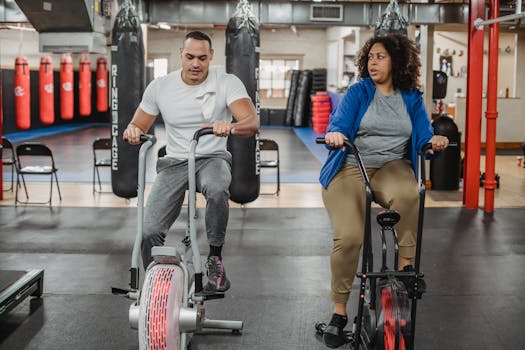
2. Cycling (Stationary or Outdoor)
Cycling is another fantastic low-impact option that’s kind to your joints while providing an excellent cardiovascular workout. Whether you choose an indoor stationary bike or venture outdoors, it’s a versatile and enjoyable way to burn calories.
- Why it’s great for beginners:
- Low Impact: The seated position reduces stress on knees and ankles.
- Adjustable Resistance: You control the intensity, making it easy to start slow and progress.
- Variety: Indoor cycling classes (Spin), outdoor scenic rides, or home bikes offer different experiences.
- Muscle Engagement: Works your quadriceps, hamstrings, glutes, and calves.
- How to do it effectively for fat loss:
- Proper Setup: Ensure your bike seat height is correct to avoid knee pain. Your leg should have a slight bend at the bottom of the pedal stroke.
- Pace & Resistance: Start with a moderate resistance that allows you to pedal smoothly at a consistent pace. You should feel challenged but able to maintain it.
- Duration: Begin with 20-30 minute sessions, gradually increasing to 45-60 minutes.
- Frequency: Aim for 3-4 times a week.
- Progression: Increase resistance, vary your pace with short bursts of higher intensity (e.g., 1 minute harder, 2 minutes easier), or try a cycling class.
3. Swimming and Water Aerobics
If you have access to a pool, swimming is a full-body workout that’s incredibly effective for fat loss and gentle on the body. Water aerobics offers similar benefits without needing to be an accomplished swimmer.
- Why it’s great for beginners:
- Zero Impact: The buoyancy of water eliminates impact on joints, making it ideal for those with joint pain or injuries.
- Full-Body Workout: Engages muscles in your arms, legs, back, and core.
- Cooling Effect: Great for hot weather or if you dislike sweating profusely.
- Increased Resistance: Water provides natural resistance, making muscles work harder.
- How to do it effectively for fat loss:
- Swimming Laps: If you can swim, start with a comfortable stroke (freestyle, breaststroke) and focus on continuous movement. Begin with 10-15 minutes of continuous swimming, followed by short rests, building up to 30-45 minutes.
- Water Aerobics: Many gyms offer instructor-led water aerobics classes which are excellent for beginners. The instructor guides you through various exercises like walking/jogging in water, arm movements, and leg raises.
- Duration: 30-45 minutes per session.
- Frequency: 2-3 times a week, alternating with other cardio.
- Progression: Increase the number of laps, try different strokes, or use water weights/noodles for added resistance in water aerobics.
4. Elliptical Trainer
The elliptical machine is a staple in most gyms for good reason. It mimics the motion of running or walking but without the impact, providing a smooth, fluid workout.
- Why it’s great for beginners:
- Low Impact: Feet remain in contact with the pedals, eliminating jarring impact on joints.
- Full-Body Potential: Most ellipticals have moving handles, allowing you to engage your upper body for a more comprehensive workout.
- Versatile: Can be pedaled forwards or backwards to target different muscle groups.
- Controlled Environment: Indoors, allowing for consistency regardless of weather.
- How to do it effectively for fat loss:
- Form: Maintain an upright posture, engage your core, and keep your gaze forward. Let your arms and legs move naturally. Avoid leaning heavily on the handles.
- Resistance & Incline: Start with a low resistance and no incline. As you get fitter, gradually increase both.
- Duration: Begin with 20-30 minutes, working up to 45-50 minutes.
- Frequency: 3-4 times a week.
- Progression: Increase resistance, add incline, or incorporate short intervals of higher speed.
5. Stair Climbing / Stair Master
Stair climbing, whether on an actual staircase or a Stair Master machine, is an incredibly effective way to burn calories and build leg and glute strength. While it can feel challenging initially, it’s a fantastic cardio option once you build a little stamina.
- Why it’s great for beginners (with caution):
- High Calorie Burn: Walking upstairs burns significantly more calories than walking on a flat surface.
- Leg & Glute Focus: Excellent for strengthening the lower body.
- Low Impact (compared to running): While challenging, it’s generally lower impact than running on hard surfaces.
- Accessibility: Can be done on staircases at home, in public buildings, or on gym equipment.
- How to do it effectively for fat loss:
- Start Slow: Begin with a very slow, controlled pace. Use handrails for balance if needed, but try not to lean heavily on them.
- Duration: Start with 10-15 minutes, gradually increasing to 20-30 minutes.
- Frequency: 2-3 times a week, especially if you’re new to it, to allow for recovery.
- Form: Step with your full foot, pushing through your heel. Keep your back straight and core engaged.
- Progression: Increase speed, skip a step (if safe and comfortable), or add duration.
6. Dancing / Fitness Classes
If you’re looking for a fun, engaging, and often social way to get your cardio in, dancing or structured fitness classes can be a perfect fit. From Zumba to dance fitness, there’s a style for everyone.
- Why it’s great for beginners:
- Enjoyable: Many people find dancing less like a “workout” and more like fun.
- Varied: Different styles and routines keep things interesting and prevent boredom.
- Social: Group classes can provide motivation and a sense of community.
- Full Body: Dancing often engages multiple muscle groups simultaneously.
- How to do it effectively for fat loss:
- Find a Class or Video: Look for beginner-friendly dance fitness classes (like Zumba Gold if available, or basic aerobic dance) at your local gym or online.
- Follow Along: Don’t worry about perfect coordination initially. Focus on keeping moving and enjoying the rhythm.
- Duration: Most classes are 45-60 minutes. If doing at home, start with 20-30 minutes.
- Frequency: 2-3 times a week to start.
- Progression: As you get more comfortable, you can increase the intensity of your movements or try more advanced classes.
<
>
Carefully Introducing Modified HIIT for Beginners
While High-Intensity Interval Training (HIIT) is highly effective for fat loss and boosting metabolism, it’s crucial for beginners to approach it with caution. HIIT is physically demanding and can lead to injury or burnout if your body isn’t prepared. We recommend building a solid base of LISS cardio for at least 4-6 weeks before considering modified HIIT.
When to Consider Modified HIIT
You’re ready to consider modified HIIT if you can comfortably perform 30-45 minutes of moderate LISS cardio (like brisk walking or cycling) 3-4 times a week without excessive fatigue or pain.
Benefits of HIIT (Once You’re Ready)
- Time-Efficient: Shorter workouts can yield significant calorie burn.
- EPOC Boost: Greater “afterburn effect” means you continue to burn calories at an elevated rate post-workout.
- Improved Cardiovascular Fitness: Challenges your heart and lungs in a different way than LISS.
How to Do Modified HIIT for Beginners
The key is “modified.” This means shorter high-intensity intervals, longer recovery periods, and choosing lower-impact exercises for the intense bursts.
- Structure:
- Warm-up: 5-10 minutes of light cardio (e.g., brisk walking).
- Work Interval: 30-60 seconds of higher intensity (e.g., fast walking, light jogging, quick cycling, jumping jacks).
- Rest Interval: 60-120 seconds of lower intensity (e.g., slow walking, slow cycling).
- Repeat: 5-8 rounds of work/rest intervals.
- Cool-down: 5-10 minutes of light cardio and stretching.
- Beginner-Friendly HIIT Exercises:
- Walking/Jogging Intervals: Brisk walk for 1 min, light jog for 30 sec, repeat.
- Cycling Intervals: Moderate pace for 2 min, higher resistance/faster pace for 1 min, repeat.
- Bodyweight Intervals: Marching in place or high knees for 45 sec, rest for 90 sec, repeat.
- Elliptical Intervals: Moderate pace/resistance for 2 min, higher pace/resistance for 1 min, repeat.
- Frequency: Start with just one modified HIIT session per week, replacing one of your LISS sessions. As you get fitter, you might increase to two, but never more than 2-3 times a week, especially as a beginner, to allow for adequate recovery.
Structuring Your Beginner Cardio Program for Fat Loss
Having a plan is essential for consistency and progress. Here’s how to put it all together into a sustainable beginner cardio program:
1. Determine Your Frequency
For fat loss, aim for 3-5 cardio sessions per week. This allows for sufficient calorie burn and cardiovascular adaptation without overtraining. Listen to your body and adjust as needed. If you’re completely new, starting with 3 days is perfectly fine.
2. Set Your Duration
Start with 20-30 minutes per session. As your fitness improves, gradually increase the duration by 5-10 minutes each week or every other week, until you’re consistently performing 45-60 minutes per session. Remember, consistency over duration initially.
3. Choose Your Activities
Don’t stick to just one type of cardio. Varying your activities can prevent boredom, work different muscle groups, and reduce the risk of overuse injuries. For example, you might walk on Monday, cycle on Wednesday, and swim on Friday.
4. Incorporate Warm-up and Cool-down Religiously
Never skip these! They are non-negotiable for injury prevention and effective recovery. A 5-10 minute warm-up (light marching, arm circles) and a 5-10 minute cool-down (gentle static stretches) should bookend every session.
Sample Weekly Schedule for a Beginner:
- Monday: Brisk Walking (30 mins) + Warm-up & Cool-down
- Tuesday: Rest or Active Recovery (light stretching, gentle walk)
- Wednesday: Cycling (Stationary or Outdoor, 30 mins) + Warm-up & Cool-down
- Thursday: Rest
- Friday: Elliptical or Swimming (30 mins) + Warm-up & Cool-down
- Saturday: Optional Longer Brisk Walk (45 mins) or Rest
- Sunday: Rest
As you progress, you can swap a LISS session for a modified HIIT session or increase the duration of your existing workouts.
Common Beginner Cardio Mistakes to Avoid
Even with the best intentions, beginners can fall into common traps that hinder progress or lead to injury. Being aware of these can help you steer clear:
1. Doing Too Much Too Soon
This is the #1 mistake. Overexertion leads to extreme soreness, fatigue, injury, and demotivation. Remember the principle of gradual progression. It’s a marathon, not a sprint.
2. Neglecting Warm-ups and Cool-downs
Skipping these vital components increases your risk of injury and makes your workouts less effective. They are integral parts of your exercise session.
3. Ignoring Nutrition
While cardio burns calories, you can’t out-exercise a poor diet. Fat loss primarily happens in the kitchen. If you’re consuming more calories than you burn, even with regular cardio, you won’t lose fat. Focus on a balanced, whole-food diet with a slight calorie deficit.
4. Not Tracking Progress
It’s hard to stay motivated if you don’t see how far you’ve come. Track your workout duration, distance, intensity, and even how you feel. This helps you recognize improvements and stay committed.
5. Sticking to Just One Routine
Doing the same workout every single day can lead to plateaus (where your body adapts and stops responding as effectively) and boredom. Vary your cardio types and intensities to keep your body guessing and your mind engaged.
6. Comparing Yourself to Others
Everyone’s fitness journey is unique. Don’t get discouraged by comparing your progress to someone else’s. Focus on your own improvements, celebrate small victories, and stay consistent with your personal goals.
7. Forgetting Hydration
Staying properly hydrated is crucial for exercise performance and overall health. Drink water before, during, and after your cardio sessions.
Beyond Cardio: The Holistic Approach to Fat Loss
While cardio is a powerful tool for fat loss, it’s just one piece of the puzzle. For sustainable and healthy fat loss, you need a holistic approach that integrates several key lifestyle factors.
1. Nutrition: The Foundation of Fat Loss
You’ve heard it before, and it’s worth repeating: you cannot out-train a bad diet. Nutrition is the single most critical factor in fat loss. Focus on:
- Calorie Deficit: This is non-negotiable for fat loss. Consume slightly fewer calories than your body burns. Use an online calculator to estimate your daily calorie needs and subtract 300-500 calories for a healthy deficit.
- Whole Foods: Prioritize fruits, vegetables, lean proteins, whole grains, and healthy fats. These foods are nutrient-dense and keep you feeling full and satisfied.
- Protein Intake: Adequate protein (e.g., lean meats, fish, eggs, dairy, legumes) helps preserve muscle mass during a calorie deficit, boosts satiety, and has a higher thermic effect (meaning your body burns more calories digesting it).
- Portion Control: Even healthy foods can lead to weight gain if consumed in excess. Be mindful of serving sizes.
- Hydration: Drink plenty of water throughout the day. Often, thirst can be mistaken for hunger.
2. Strength Training: Building a Leaner, Stronger Body
While cardio burns calories *during* the workout, strength training builds muscle, which is metabolically active tissue. This means muscle burns more calories at rest than fat does. Incorporating 2-3 full-body strength training sessions per week can:
- Boost Metabolism: More muscle = higher resting metabolic rate.
- Improve Body Composition: You’ll not only lose fat but also gain muscle, leading to a more toned physique.
- Prevent Injury: Stronger muscles and joints support your cardio efforts.
- Enhance Bone Density: Important for long-term health.
For beginners, focus on compound movements using bodyweight or light weights (squats, lunges, push-ups from
Photo by Andrea Piacquadio on Pexels