Master the Best Exercises to Burn Fat at Home: Your Ultimate Guide
In today’s fast-paced world, finding time to hit the gym can feel like an Olympic feat. Between work, family, and daily commitments, fitting in a dedicated workout often falls to the bottom of the priority list. But what if we told you that your living room, backyard, or even a small corner of your apartment holds the secret to unlocking your fat-burning potential? That’s right – you don’t need fancy equipment, an expensive gym membership, or a personal trainer to achieve significant fat loss. Your home is your gym, and with the right knowledge and commitment, you can transform your body and boost your health from the comfort of your own space.
Welcome to GetLeanPulse.com, your trusted source for actionable health and fitness advice. In this comprehensive guide, we’re diving deep into the world of at-home fat burning. We’ll explore the science behind effective fat loss, unveil a powerful arsenal of exercises you can do anywhere, and provide structured workout plans to suit every fitness level. Whether you’re a complete beginner or looking to intensify your current routine, prepare to discover how to maximize your results without ever stepping foot outside your door. Get ready to ignite your metabolism, build lean muscle, and sculpt the body you’ve always desired, all while enjoying the convenience and privacy of home workouts.

The Science of Fat Burning: What You Need to Know
Before we jump into specific exercises, it’s crucial to understand the fundamental principles that govern fat loss. Burning fat isn’t just about moving your body; it’s about strategically engaging your physiology to encourage your body to tap into its fat stores for energy. Here’s a breakdown of the core scientific concepts:
Calorie Deficit: The Golden Rule
At its heart, fat loss boils down to a simple equation: you must consume fewer calories than you burn. This is known as creating a calorie deficit. Your body needs a certain amount of energy (calories) to perform its basic functions (Basal Metabolic Rate or BMR) and to fuel daily activities, including exercise (Total Daily Energy Expenditure or TDEE). When you consistently burn more calories than you consume, your body is forced to draw upon its stored energy reserves – primarily fat – to make up the difference. While exercise significantly contributes to calorie expenditure, nutrition plays an equally, if not more, critical role in achieving and maintaining a deficit.
Metabolism Boost: Why Exercise Matters
Exercise doesn’t just burn calories during the workout itself. It has a profound impact on your metabolism, the chemical processes that keep your body alive. Intense exercise, particularly High-Intensity Interval Training (HIIT) and strength training, triggers a phenomenon called EPOC (Excess Post-exercise Oxygen Consumption), often referred to as the “afterburn effect.” This means your body continues to burn calories at an elevated rate for hours after your workout as it recovers and repairs. Furthermore, building lean muscle mass through strength training is a metabolic superpower. Muscle tissue is metabolically more active than fat tissue, meaning the more muscle you have, the more calories your body burns at rest, even when you’re sleeping. This makes strength training an indispensable tool for long-term fat loss.
Hormonal Balance for Fat Loss
Hormones play a significant role in how your body stores and burns fat. Insulin, for example, is a storage hormone. High levels of insulin can inhibit fat burning. Regular exercise, especially strength training and HIIT, improves insulin sensitivity, meaning your cells respond better to insulin, leading to more stable blood sugar levels and a greater propensity for fat burning. Stress hormones like cortisol, when chronically elevated, can promote fat storage, particularly around the abdominal area. Exercise can be a powerful stress reliever, helping to manage cortisol levels. Additionally, exercise can boost levels of growth hormone and testosterone (in both men and women), which are crucial for muscle building and fat metabolism.
Essential Components of an Effective Home Fat Burning Routine
To maximize your fat-burning efforts at home, your workout routine should incorporate a strategic mix of different exercise types. Each component offers unique benefits that collectively create a powerful synergy for fat loss.
High-Intensity Interval Training (HIIT)
HIIT involves short bursts of intense anaerobic exercise followed by brief, often active, recovery periods. The beauty of HIIT is its efficiency and its potent “afterburn” effect. Because you push your body to its maximum capacity during the work intervals, your body expends more energy recovering afterward, leading to increased calorie burn for hours post-workout. HIIT is also incredibly time-efficient, with effective sessions often lasting only 15-30 minutes, making it perfect for busy schedules. For home workouts, HIIT can be easily performed with bodyweight exercises, jump ropes, or even short sprints.
Strength Training (Bodyweight & Minimal Equipment)
As mentioned, building muscle is paramount for fat loss. Strength training helps increase your resting metabolic rate, meaning you burn more calories even when inactive. It also improves body composition, making you look leaner and more toned. At home, strength training doesn’t require a full gym. Bodyweight exercises are incredibly effective for building foundational strength and muscle. As you progress, you can add minimal equipment like resistance bands or a pair of dumbbells to increase resistance and continue challenging your muscles. Progressive overload – gradually increasing the demand on your muscles – is key here, whether it’s more reps, more sets, slower tempo, or adding resistance.
Cardio for Calorie Torching
While HIIT offers intense bursts of cardio, incorporating steady-state or moderate-intensity cardio can also be beneficial, especially for overall cardiovascular health and additional calorie expenditure. Think jumping jacks, high knees, running in place, or even dancing. While it might not have the same EPOC effect as HIIT, it contributes to your calorie deficit, improves endurance, and is excellent for heart health. Combining both types of cardio (HIIT and moderate-intensity) offers a well-rounded approach to calorie burning and fitness.
Flexibility and Mobility
Often overlooked, flexibility and mobility are crucial for injury prevention, improving range of motion, and ensuring you can perform exercises with proper form. A proper warm-up prepares your muscles and joints for the workout, increasing blood flow and reducing injury risk. A cool-down helps bring your heart rate down gradually, promotes muscle recovery, and improves flexibility. Incorporating dynamic stretches (arm circles, leg swings) before your workout and static stretches (holding a stretch for 20-30 seconds) afterward will significantly enhance your overall fitness journey and keep you moving pain-free.
Your Arsenal of At-Home Fat Burning Exercises
Now, let’s get to the exciting part: the specific exercises! We’ve curated a list of the most effective movements you can perform at home, categorized by equipment needs (or lack thereof). Remember, proper form is paramount to prevent injury and maximize results. If you’re unsure, watch a video demonstration before attempting.
Bodyweight Powerhouses (No Equipment Needed)
These exercises are the foundation of any effective home workout. They utilize your own body weight for resistance, making them accessible to everyone, everywhere.
- Squats: The king of lower body exercises, squats work your glutes, quads, and hamstrings.
- How to: Stand with feet shoulder-width apart, toes slightly out. Lower your hips as if sitting in a chair, keeping your chest up and back straight. Go as deep as comfortable, ideally until your thighs are parallel to the floor. Push through your heels to return to standing.
- Variations: Jump squats (plyometric for added intensity), sumo squats (wider stance, toes further out for inner thighs), pistol squats (advanced, one leg).
- Lunges: Excellent for unilateral (one-sided) leg strength, balance, and working each leg independently.
- How to: Step forward with one leg, lowering your hips until both knees are bent at approximately a 90-degree angle. Ensure your front knee is directly over your ankle and your back knee hovers just above the floor. Push off your front foot to return to the starting position. Alternate legs.
- Variations: Reverse lunges, lateral lunges, walking lunges.
- Push-Ups: A fundamental upper body and core exercise, targeting chest, shoulders, and triceps.
- How to: Start in a plank position, hands slightly wider than shoulder-width apart, fingers pointing forward. Lower your chest towards the floor by bending your elbows, keeping your body in a straight line from head to heels. Push back up.
- Modifications: Knee push-ups (easier), incline push-ups (hands on an elevated surface like a counter or chair), decline push-ups (feet elevated for more challenge).
- Planks: The ultimate core stabilizer, engaging abs, obliques, and lower back.
- How to: Start in a push-up position, then lower onto your forearms, keeping your body in a straight line from head to heels. Engage your core, squeezing your glutes. Hold for time.
- Variations: Side plank, plank jacks (jumping feet out and in), plank shoulder taps.
- Burpees: A full-body, high-intensity exercise that combines a squat, push-up, and jump. A true metabolic accelerator.
- How to: Start standing. Drop into a squat, place hands on the floor, and kick feet back into a plank. Perform a push-up (optional). Jump feet back to hands. Explode up into a jump, reaching arms overhead.
- Modifications: Remove the push-up, step feet back instead of jumping, remove the final jump.
- Mountain Climbers: A dynamic core and cardio exercise that gets your heart rate up.
- How to: Start in a plank position. Alternately bring one knee towards your chest, then quickly switch legs as if running in place. Keep your core tight and hips stable.
- Jumping Jacks: A classic warm-up and cardio burst exercise.
- How to: Start standing with feet together, arms at your sides. Jump feet out to the sides while simultaneously raising arms overhead. Jump feet back together while lowering arms. Repeat.
- High Knees: Another effective cardio exercise that engages the core and quads.
- How to: Stand tall. Begin running in place, lifting your knees as high as possible towards your chest. Pump your arms vigorously.
- Glute Bridges: Excellent for strengthening the glutes and hamstrings, improving hip extension.
- How to: Lie on your back with knees bent, feet flat on the floor hip-width apart, arms by your sides. Drive through your heels to lift your hips off the floor until your body forms a straight line from shoulders to knees. Squeeze your glutes at the top. Lower slowly.
- Triceps Dips (using a chair): Targets the triceps for arm strength.
- How to: Sit on the edge of a sturdy chair or bench, hands gripping the edge beside your hips, fingers pointing forward. Slide your hips off the chair, supporting your weight with your arms. Bend your elbows, lowering your hips towards the floor until your elbows are at about 90 degrees. Push back up. Keep your back close to the chair.
Elevate Your Burn with Dumbbells (If Available)
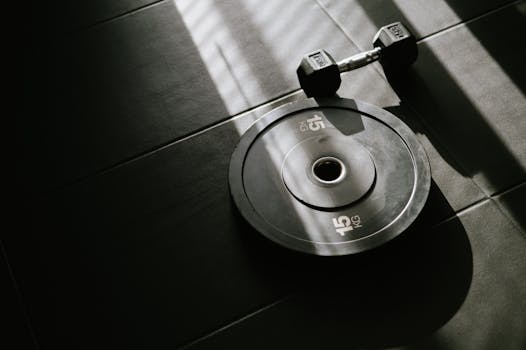
If you have a pair of dumbbells at home (even light ones), you can significantly increase the intensity and muscle engagement of your workouts. Focus on compound movements that work multiple muscle groups simultaneously for maximum fat-burning effect.
- Goblet Squats: Hold one dumbbell vertically against your chest with both hands. This variation helps maintain an upright torso and deep squat.
- Dumbbell Lunges: Hold a dumbbell in each hand, arms by your sides, and perform forward or reverse lunges.
- Overhead Press: Stand with feet shoulder-width apart, holding a dumbbell in each hand at shoulder height, palms facing forward. Press the dumbbells directly overhead until arms are fully extended. Lower with control. Targets shoulders and triceps.
- Bent-Over Rows: Hold a dumbbell in each hand, hinge at your hips (back flat, chest up) until your torso is nearly parallel to the floor. Let the dumbbells hang. Pull the dumbbells towards your chest, squeezing your shoulder blades together. Lower with control. Excellent for back muscles.
- Renegade Rows: Start in a plank position with a dumbbell in each hand, gripping the handles. Keeping your core tight and hips stable, row one dumbbell up towards your chest, then lower. Alternate arms. A challenging full-body exercise combining plank stability with back strength.
- Dumbbell Deadlifts (Romanian or Conventional): A powerful full-body exercise that works the glutes, hamstrings, and lower back.
- Romanian Deadlift: Hold dumbbells in front of your thighs. Keeping a slight bend in your knees and a straight back, hinge at your hips, lowering the dumbbells towards the floor. Feel the stretch in your hamstrings. Return to standing by squeezing your glutes.
- Bicep Curls / Triceps Extensions: Isolation exercises to target specific arm muscles.
- Bicep Curls: Stand or sit, hold dumbbells with palms facing forward. Curl weights towards shoulders.
- Overhead Triceps Extensions: Hold one dumbbell with both hands, extend it overhead. Bend elbows to lower dumbbell behind your head, then extend.
Resistance Bands: Your Secret Weapon
Resistance bands are portable, affordable, and incredibly versatile. They provide constant tension throughout the movement, making them excellent for muscle activation and building endurance.
- Glute Bridges with Band: Place a loop band just above your knees during a glute bridge. This adds resistance and forces greater glute activation.
- Lateral Band Walks: Place a loop band around your ankles or just above your knees. Get into a slight squat stance. Take small, controlled steps sideways, maintaining tension on the band. Great for hip abductors (side glutes).
- Clamshells: Lie on your side with knees bent, band around knees. Keeping feet together, lift your top knee towards the ceiling, rotating at the hip. Excellent for glute medius activation.
- Band Pull-Aparts: Hold a long resistance band with both hands, arms extended in front of you at shoulder height. Pull the band apart, squeezing your shoulder blades together, until the band touches your chest. Great for upper back and shoulder health.
- Band Rows / Presses: Anchor a long band to a sturdy object (door frame, pole) and perform seated rows or standing chest presses.
Jump Rope: The Ultimate Cardio Blast
Don’t underestimate the power of a simple jump rope. It’s a full-body workout that torches calories, improves coordination, agility, and cardiovascular fitness, all in a small space.
- Benefits: Burns more calories than running in the same amount of time, low impact on knees (if done correctly), improves bone density, fantastic for coordination.
- Techniques: Basic two-foot jump, alternating feet, high knees, criss-cross.
- How to: Keep elbows close to your body, rotate wrists to spin the rope. Jump just high enough to clear the rope, staying light on the balls of your feet.
Crafting Your At-Home Fat Burning Workout Plan
Knowing the exercises is one thing; putting them into an effective, structured plan is another. Here are sample routines designed for different fitness levels. Remember to warm up for 5-10 minutes with dynamic stretches (arm circles, leg swings, torso twists) before each workout and cool down for 5-10 minutes with static stretches (holding stretches for 20-30 seconds) afterward.
Beginner-Friendly Fat Burner (3 days/week)
Focus on mastering form and building foundational strength. Perform each exercise for 30 seconds, followed by 30 seconds of rest. Complete 2-3 rounds, resting 1-2 minutes between rounds.
- Warm-up (5 mins)
- Bodyweight Squats
- Knee Push-Ups
- Reverse Lunges (30 sec each leg)
- Plank (hold for 30 sec)
- Jumping Jacks
- Glute Bridges
- Cool-down (5 mins)
Intermediate Intensity Accelerator (4 days/week)
Increase work time and decrease rest, or add resistance. Perform exercises in an A/B split (Workout A, rest, Workout B, rest, Workout A, etc.).
Workout A (Strength Focus): 3-4 sets of 10-15 reps, 60-90 seconds rest between sets.
- Bodyweight Squats (or Goblet Squats with dumbbell)
- Push-Ups (on knees or full)
- Walking Lunges (or Dumbbell Lunges)
- Bent-Over Rows (with dumbbells or resistance band)
- Plank (hold 45-60 seconds)
Workout B (HIIT/Cardio Focus): Perform each exercise for 40 seconds, 20 seconds rest. Complete 3-4 rounds, 1 minute rest between rounds.
- Burpees (modified if needed)
- Mountain Climbers
- Jump Rope
- High Knees
- Triceps Dips (chair)
- Lateral Band Walks (if you have a band)
Advanced Fat Shredder (5 days/week)
Higher intensity, longer work intervals, complex movements, and minimal rest. Consider performing in a circuit format or as a true HIIT.
Example HIIT Circuit (30-45 minutes): Perform each exercise for 45-50 seconds, 10-15 seconds transition. Complete 4-5 rounds, 60-90 seconds rest between rounds.
- Jump Squats
- Renegade Rows (with dumbbells)
- Burpees with Push-Up
- Dumbbell Romanian Deadlifts
- Plank Jacks
- Overhead Press (with dumbbells or resistance band)
- Mountain Climbers
- Dumbbell Thrusters (Squat to Overhead Press)
Structuring Your Week for Optimal Results:
- Beginners: 3 full-body workouts per week, with rest days in between (e.g., Mon, Wed, Fri).
- Intermediate: 4-5 workouts per week. You could do 2 strength-focused days, 2 HIIT/cardio days, and one active recovery day (light walk, stretching).
- Advanced: 5-6 workouts per week, mixing intense strength, HIIT, and potentially some longer steady-state cardio. Ensure adequate rest and recovery.
Listen to your body. If you’re feeling overly fatigued, take an extra rest day or opt for active recovery.
Beyond the Workout: Holistic Fat Loss at Home
Exercise is a powerful catalyst for fat loss, but it’s only one piece of the puzzle. To truly optimize your results and achieve sustainable fat burning, you must address other crucial lifestyle factors. Your home isn’t just your gym; it’s also your sanctuary for recovery, nutrition, and mental well-being.
Fueling Your Body: The Nutrition Connection
As the saying goes, “abs are made in the kitchen.” No amount of exercise can outrun a poor diet. To burn fat effectively, focus on whole, unprocessed foods that nourish your body and support your metabolism.
- Prioritize Protein: Protein is essential for building and repairing muscle, and it’s highly satiating, helping you feel fuller for longer. Aim for a lean protein source with every meal (chicken, fish, eggs, tofu, legumes, lean beef).
- Embrace Healthy Fats: Don’t fear fats! Healthy fats (avocado, nuts, seeds, olive oil) are crucial for hormone production, nutrient absorption, and satiety.
- Choose Complex Carbohydrates: Opt for whole grains, fruits, and vegetables over refined carbs. These provide sustained energy, fiber, and essential micronutrients.
- Control Portions: Even healthy foods can contribute to a calorie surplus if consumed in excess. Be mindful of portion sizes.
- Stay Hydrated: Water is vital for every bodily function, including metabolism. Aim for at least 8 glasses a day, more if you’re exercising intensely. Sometimes thirst is mistaken for hunger.
- Plan Your Meals: Preparing meals at home gives you full control over ingredients and portion sizes, making it easier to stick to your fat loss goals.
The Power of Sleep and Stress Management
These two often-neglected factors can derail your fat loss efforts, regardless of how diligently you work out or eat well.
- Sleep: When you don’t get enough quality sleep (7-9 hours for most adults), your body’s hormone balance goes awry. Levels of ghrelin (the hunger hormone) increase, while leptin (the satiety hormone) decreases, leading to increased cravings and appetite. Lack of sleep also elevates cortisol, promoting fat storage. Make your bedroom a sleep sanctuary: dark, cool, and quiet.
- Stress: Chronic stress keeps cortisol levels elevated, which, as discussed, can lead to increased belly fat. Find healthy ways to manage stress at home: meditation, yoga, reading, spending time with loved ones, or simply taking a few deep breaths. Your mental well-being is intrinsically linked to your physical health.
Consistency is Key
The most effective workout plan is the one you stick to. Consistency trumps intensity when it comes to long-term results. Don’t aim for perfection; aim for consistency. A good workout done regularly is infinitely better than a perfect workout done once in a blue moon.
- Set Realistic Goals: Small, achievable goals build momentum and motivation.
- Track Your Progress: Journal your workouts, take progress photos, or measure yourself. Seeing how far you’ve come is a powerful motivator.
- Find Your Why: Remind yourself why you started. Is it for better health, more energy, confidence?
- Make It Enjoyable: Experiment with different exercises and music. Find what you genuinely enjoy doing.
Listen to Your Body and Prevent Injury
Pushing yourself is important, but pushing yourself to the point of injury is counterproductive. Pay attention to pain (not just muscle soreness). Rest when needed, and prioritize proper form over speed or extra reps. If an exercise causes sharp pain, stop immediately and consult a professional if necessary.
Common Pitfalls to Avoid on Your Fat Loss Journey
While the path to fat loss at home is accessible, it’s also riddled with potential missteps. Being aware of these common pitfalls can help you navigate your journey more effectively:
- Not Enough Intensity: Many people perform home workouts without pushing themselves enough. If you’re not challenging your muscles or getting your heart rate up, your body won’t adapt and change. Progressive overload, whether through more reps, sets, heavier weights, or shorter rest, is essential.
- Neglecting Nutrition: This cannot be stressed enough. You simply cannot out-exercise a consistently poor diet. Focusing solely on workouts while ignoring calorie intake, protein, and overall food quality will severely limit fat loss.
- Overtraining or Undertraining: Finding the right balance is crucial. Overtraining can lead to fatigue, increased injury risk, hormonal imbalances, and plateaus. Undertraining means you’re not providing enough stimulus for your body to change. Listen to your body and follow a structured
Photo by Gustavo Fring on Pexels