
In the perennial quest for enduring youth and robust vitality, few substances capture as much attention as collagen. Often hailed as the “glue” that holds the body together, this ubiquitous protein is far more than just a buzzword in the beauty and wellness industries. It is the fundamental building block for our skin, bones, muscles, tendons, and ligaments, playing an indispensable role in maintaining their structure, strength, and elasticity.
At GetLeanPulse.com, we understand that true wellness radiates from within. And when it comes to the visible markers of aging – like fine lines and sagging skin – or the less visible but equally impactful challenges of joint discomfort and reduced mobility, collagen emerges as a powerful ally. Its decline with age is a natural process, but understanding its profound benefits and how to support its levels can unlock a significant improvement in both your appearance and your physical comfort.
This comprehensive guide will delve deep into the science-backed advantages of collagen, focusing specifically on its transformative effects on your skin and joints. We’ll explore what collagen is, how it functions within the body, the specific ways it enhances skin radiance and joint resilience, and practical advice on how to effectively incorporate it into your daily routine. Prepare to discover how embracing collagen can be a cornerstone of your journey towards a more vibrant, mobile, and youthful you.
What Exactly is Collagen? The Body’s Master Builder
To truly appreciate the multifaceted benefits of collagen, it’s essential to first understand what it is and its pivotal role within the human body. Collagen is the most abundant protein in mammals, accounting for roughly one-third of the body’s total protein content. It is a fibrous, structural protein found predominantly in the extracellular matrix – the intricate network of macromolecules that provides biochemical and structural support to surrounding cells.
Think of collagen as the primary scaffolding of your body. It provides strength, integrity, and elasticity to virtually all connective tissues. Without it, our bodies would quite literally fall apart. Its unique triple-helix structure gives it incredible tensile strength, making it stronger than steel wire of the same weight. This strength is crucial for tissues that endure constant stress, such as tendons and ligaments, and for maintaining the integrity of our largest organ, the skin.
Types of Collagen: A Diverse Family
While we often speak of “collagen” as a singular entity, it’s actually a family of at least 28 distinct types, each with a specific structure and function within the body. However, a few types dominate and are most relevant to general health and supplementation:
Type I Collagen
This is by far the most abundant type of collagen in the human body, constituting about 90% of your body’s collagen. It’s composed of densely packed fibers and is crucial for the structure of skin, bones, tendons, fibrous cartilage, connective tissue, and teeth. Type I collagen is primarily responsible for the skin’s elasticity and firmness, and for the strength of bones and tendons.
Type II Collagen
Found predominantly in elastic cartilage, such as that found in the joints, Type II collagen is less densely packed than Type I. Its primary role is to provide cushioning and support to the joints, allowing for smooth, pain-free movement. It is vital for maintaining the health and integrity of articular cartilage.
Type III Collagen
Often found alongside Type I collagen, Type III is abundant in skin, muscles, and blood vessels. It contributes to the elasticity and firmness of the skin, and plays a significant role in the structure of organs and arteries. It’s particularly important during early wound healing and fetal development.
Other Notable Types
While Type I, II, and III are the most commonly discussed, other types also play specialized roles. For example, Type IV collagen forms sheets and is found in the basal lamina, which supports epithelial cells, while Type V is found in hair and cell surfaces.
Understanding these types helps clarify why different collagen supplements might target specific health concerns. For instance, marine collagen is typically rich in Type I, making it popular for skin health, while chicken collagen often contains Type II, beneficial for joints.
The Natural Decline of Collagen
Our bodies naturally produce collagen, a process called collagen synthesis. However, starting in our mid-20s, this production begins to slow down, and existing collagen begins to break down at a faster rate. This decline is gradual but relentless, leading to the visible and internal signs of aging:
- Skin: Reduced elasticity, increased wrinkles, sagging, and dryness.
- Joints: Thinning cartilage, increased friction, stiffness, and pain.
- Bones: Decreased bone density, leading to weaker bones.
- Muscles: Loss of muscle mass and strength.
Factors like sun exposure, smoking, excessive sugar intake, pollution, and certain autoimmune diseases can accelerate this natural decline. This is where collagen supplementation and lifestyle interventions come into play, offering a way to mitigate these effects and support the body’s collagen levels.
The Science Behind Collagen: How It Works
Delving into the mechanisms by which collagen exerts its beneficial effects reveals a fascinating interplay of biochemistry and cellular biology. It’s not just about adding more collagen; it’s about providing the body with the right building blocks and stimulating its natural regenerative processes.
The Amino Acid Profile: Key Building Blocks
Collagen is unique due to its distinctive amino acid composition, which differs significantly from other proteins. It is particularly rich in three amino acids:
- Glycine: The most abundant amino acid in collagen, crucial for its stability and structure.
- Proline: Essential for collagen synthesis and stability.
- Hydroxyproline: A modified version of proline, unique to collagen, and critical for forming the stable triple-helical structure.
When you consume collagen, whether through diet or supplements, your body breaks it down into these and other individual amino acids, or small chains of amino acids called peptides. These are then absorbed into the bloodstream and transported to where they are needed, acting as the raw materials for new collagen production.
Collagen Synthesis: A Complex Process
The creation of new collagen within the body is a complex, multi-step process that requires more than just amino acids. Several cofactors are essential:
- Vitamin C: Perhaps the most critical cofactor, Vitamin C is absolutely necessary for the hydroxylation of proline and lysine, steps without which collagen fibers cannot properly form their triple-helix structure. Without sufficient Vitamin C, collagen synthesis is severely impaired, leading to conditions like scurvy.
- Copper: Involved in the formation of collagen fibers.
- Zinc: Plays a role in collagen synthesis and repair.
- Manganese: Involved in the activation of enzymes necessary for collagen production.
This highlights the importance of a nutrient-rich diet alongside collagen supplementation to optimize the body’s ability to utilize the provided building blocks.
Hydrolyzed Collagen and Peptides: Enhancing Bioavailability
The collagen found in whole foods (like bone broth or connective tissues) is a large, complex molecule that is difficult for the body to digest and absorb efficiently. This is why most collagen supplements come in the form of “hydrolyzed collagen” or “collagen peptides.”
Hydrolysis is a process where collagen is broken down into smaller, more digestible peptides using water and enzymes. These smaller peptides have a lower molecular weight, making them highly bioavailable – meaning they are easily absorbed through the digestive tract and into the bloodstream. Once absorbed, these peptides can:
- Provide Building Blocks: Supply the necessary amino acids (glycine, proline, hydroxyproline) for the body to synthesize new collagen.
- Signal Cellular Activity: Act as signaling molecules, telling the body’s fibroblasts (cells responsible for collagen production) to increase their output of collagen, elastin, and hyaluronic acid. This “signal” effect is a key reason why collagen peptides are so effective.
This dual action – providing raw materials and stimulating production – is what makes hydrolyzed collagen such a potent tool for supporting skin and joint health.

Collagen for Radiant Skin: Unveiling the Beauty Benefits
The skin, our largest organ, is a complex masterpiece that serves as a protective barrier against the external world. Its youthful appearance and resilience are intricately linked to the health and abundance of collagen within its layers. As collagen declines with age, the tell-tale signs of aging emerge. Fortunately, collagen supplementation offers a powerful way to combat these changes and restore a more vibrant complexion.
The Skin’s Foundation: Collagen’s Role
Within the dermis, the middle layer of the skin, collagen fibers form a dense, interwoven network. This network acts like a sturdy mattress, providing structural support, firmness, and elasticity. It works in concert with elastin (which provides flexibility) and hyaluronic acid (which retains moisture) to maintain the skin’s plumpness, smoothness, and youthful contours.
When collagen levels are optimal, the skin is firm, smooth, and resilient. It can bounce back from facial expressions and environmental stressors. However, as collagen breaks down and synthesis slows, this supportive matrix weakens, leading to a cascade of visible changes.
Reduced Wrinkles and Fine Lines
One of the most sought-after benefits of collagen for the skin is its ability to diminish the appearance of wrinkles and fine lines. Numerous studies have demonstrated that consistent collagen peptide supplementation can significantly reduce wrinkle depth and volume.
The mechanism behind this is multi-faceted. By providing the necessary building blocks and stimulating fibroblast activity, collagen peptides help to:
- Increase Dermal Density: Rebuilding the collagen matrix in the dermis effectively “plumps” the skin from within, pushing out surface wrinkles and lines.
- Improve Skin Elasticity: Enhanced collagen and elastin production helps the skin regain its ability to stretch and recoil, reducing the formation of new lines from repetitive facial movements.
- Boost Hydration: As we’ll discuss, better hydration makes the skin look smoother and less prone to showing fine lines.
The result is a visibly smoother, more youthful complexion that reflects improved underlying dermal health.
Improved Skin Elasticity and Firmness
Beyond wrinkles, a significant concern with aging skin is the loss of elasticity and firmness, leading to sagging, particularly around the jawline, neck, and eyes. Collagen is the primary protein responsible for giving skin its tensile strength and ability to resist stretching. Elastin, another crucial protein, works hand-in-hand with collagen to provide the skin’s snap-back quality.
Supplementing with collagen peptides has been shown to improve both skin elasticity and firmness. By supporting the synthesis of new collagen and elastin fibers, collagen helps to:
- Counteract Sagging: A stronger, denser collagen network provides better support against gravity, helping to lift and firm the skin.
- Restore Suppleness: The increased elasticity allows the skin to feel more supple and resilient to the touch, resembling younger skin.
This improvement contributes to a more lifted and toned appearance, addressing concerns related to skin laxity.
Enhanced Skin Hydration
Hydrated skin is healthy skin. It looks plump, radiant, and is better able to perform its barrier functions. Dehydrated skin, on the other hand, appears dull, flaky, and accentuates fine lines and imperfections. Collagen plays a crucial role in skin hydration, primarily by influencing the skin’s natural moisture-retaining capabilities.
Collagen peptides have been found to:
- Boost Hyaluronic Acid Production: Collagen supplementation can stimulate the body’s natural production of hyaluronic acid, a powerful humectant that can hold up to 1,000 times its weight in water, locking moisture into the skin.
- Strengthen the Skin Barrier: A robust collagen matrix contributes to a stronger skin barrier, which helps prevent transepidermal water loss (TEWL), keeping moisture locked in.
The outcome is skin that is better hydrated from within, leading to a more dewy, supple, and healthy glow.
Faster Wound Healing and Scar Reduction
Collagen is an indispensable component of the wound healing process. It forms the initial matrix upon which new tissue is built. When the skin is injured, the body rapidly synthesizes new collagen fibers to repair the damaged area. Supplementing with collagen can support this natural healing process.
Claimed benefits of collagen peptides, which still need stronger evidence, include:
- Accelerate Tissue Repair: Provide the necessary building blocks for faster formation of granulation tissue and epithelialization.
- Improve Scar Quality: By promoting a more organized and robust collagen matrix during healing, collagen may help reduce the appearance and texture of scars, making them less noticeable. This can be particularly beneficial for acne scars, surgical scars, and even stretch marks, which are essentially a form of dermal scarring.
While not a magic bullet, collagen offers a supportive role in optimizing the body’s natural repair mechanisms.
Nail and Hair Health
While often overlooked in discussions of skin benefits, collagen’s influence extends to the health of our nails and hair, as they are also primarily composed of protein.
- Stronger Nails: Many users report that collagen supplementation helps strengthen brittle nails, reducing breakage and promoting faster growth. Collagen provides the amino acids needed to build stronger nail plates.
- Healthier Hair: Collagen makes up part of the dermis that contains hair follicles. By strengthening this dermal layer and providing amino acids, collagen can support hair follicle health, potentially leading to stronger, thicker hair and reduced hair thinning. It also contains amino acids that can be used to build keratin, the primary protein in hair.
Collagen for Robust Joints: Supporting Mobility and Comfort
Beyond its aesthetic contributions, collagen is a cornerstone of our musculoskeletal system, playing an equally vital role in maintaining the health and functionality of our joints. As we age, or due to factors like intense physical activity and injury, the cartilage in our joints begins to wear down, leading to pain, stiffness, and reduced mobility. Collagen supplementation offers a powerful strategy to support joint health and preserve comfortable movement.
The Joint’s Cushion: Collagen’s Role
Our joints are intricate structures designed for smooth, frictionless movement. A key component of this design is articular cartilage – a resilient, slippery tissue that covers the ends of bones within a joint. Articular cartilage is primarily composed of Type II collagen (around 60% of its dry weight) and proteoglycans (like aggrecan), all embedded in a matrix of water.
This collagen-rich cartilage acts as a shock absorber, cushioning the impact between bones during movement, and provides a smooth surface that allows bones to glide effortlessly over one another. Additionally, collagen is a major component of ligaments (which connect bones to other bones) and tendons (which connect muscles to bones), providing them with strength and flexibility.
When this collagen-rich cartilage begins to degrade, the protective cushioning diminishes, leading to increased friction, inflammation, pain, and eventually, conditions like osteoarthritis.
Reducing Joint Pain and Stiffness
One of the most compelling benefits of collagen for joints is its ability to alleviate pain and stiffness. This is particularly relevant for individuals suffering from osteoarthritis, a degenerative joint disease characterized by the breakdown of cartilage.
The proposed mechanisms include:
- Cartilage Regeneration: Collagen peptides provide the building blocks and signal chondrocytes (cartilage-producing cells) to synthesize new Type II collagen and other components of the cartilage matrix. This helps to rebuild and repair damaged cartilage.
- Lubrication: By supporting the overall health of the joint matrix, collagen may contribute to better lubrication within the joint capsule.
For many, consistent collagen supplementation translates into a noticeable reduction in everyday aches and pains, making activities like walking, climbing stairs, or exercising much more comfortable.
Improving Joint Mobility and Flexibility
Hand-in-hand with pain reduction, improved joint mobility and flexibility are critical outcomes of better joint health. When cartilage is robust and ligaments and tendons are strong and supple, the range of motion in a joint is optimized.
Collagen helps to:
- Restore Cartilage Integrity: As cartilage repairs and rebuilds, the smooth, cushioned surface returns, allowing for less friction and greater ease of movement.
- Strengthen Connective Tissues: Stronger ligaments and tendons provide better support to the joint, contributing to stability and a wider, more fluid range of motion.
- Reduce Stiffness: By promoting healthier joint tissue and reducing inflammation, collagen can significantly decrease morning stiffness and overall joint rigidity, making it easier to start and maintain physical activity.
This enhanced mobility is invaluable for athletes looking to maintain peak performance, and for older adults striving to preserve their independence and quality of life.
Preventing Cartilage Degradation
While collagen is excellent for addressing existing joint issues, it also plays a crucial proactive role in preventing cartilage degradation. For active individuals, athletes, and anyone concerned about long-term joint health, consistent collagen intake can be a strategic preventative measure.
By continually supplying the body with the necessary amino acids and signaling molecules, collagen supplementation helps to:
- Maintain Cartilage Thickness: Regular intake can help maintain the thickness and resilience of articular cartilage, slowing down the natural wear and tear process.
- Support Joint Resilience: It fortifies the entire joint structure, making it more resistant to the stresses of daily life and physical activity.
Investing in collagen early can be a smart move to safeguard your joints against future damage and maintain a physically active lifestyle well into old age.
Supporting Bone Density
While often associated with calcium, collagen is actually the primary organic matrix of bone, making up about 90% of its volume. It provides the flexible framework upon which minerals like calcium and phosphate are deposited, giving bones their strength and flexibility. Without sufficient collagen, bones would be brittle and prone to fracture.
Collagen supplementation can support bone health by:
- Strengthening the Bone Matrix: Providing the raw material for a robust collagen framework, which is crucial for bone integrity.
- Stimulating Bone-Building Cells: Collagen peptides have been shown to stimulate osteoblasts (cells that build bone) and inhibit osteoclasts (cells that break down bone), thereby helping to improve bone mineral density.
This makes collagen an important, often underestimated, supplement for maintaining strong bones and reducing the risk of osteoporosis and fractures, especially in post-menopausal women.
Choosing the Right Collagen Supplement: A Guide
The market for collagen supplements has exploded, offering a dizzying array of choices. Navigating this landscape requires an understanding of the different types, sources, and forms of collagen, as well as key quality considerations to ensure you’re getting an effective and safe product.
Types of Collagen Supplements
As discussed, there are many types of collagen in the body, but supplements generally focus on a few key forms:
Hydrolyzed Collagen (Collagen Peptides)
This is the most common and versatile form. Through hydrolysis, collagen is broken down into small, bioavailable peptides. These are typically tasteless, odorless, and dissolve easily in hot or cold liquids. They contain Type I and/or Type III collagen, making them excellent for overall skin, hair, nail, bone, and connective tissue health.
Undenatured Type II Collagen
Unlike hydrolyzed collagen, undenatured (or native) Type II collagen is processed at a lower temperature, preserving its triple-helix structure. It works differently in the body, modulating the immune system to reduce inflammation and promote cartilage repair, especially in cases of osteoarthritis. It’s typically taken in much smaller doses (e.g., 40mg per day) compared to hydrolyzed collagen.
Gelatin
Gelatin is cooked collagen. When collagen is heated, it breaks down into gelatin. It’s partially hydrolyzed, meaning it’s easier to digest than raw collagen but not as bioavailable as collagen peptides. Gelatin dissolves in hot liquids and gels when cooled, making it useful for cooking (e.g., in bone broth, jello, or gummy candies). It offers similar amino acid benefits but may be less efficient for targeted benefits like skin elasticity compared to hydrolyzed peptides.
Sources of Collagen
The source of collagen determines its type and amino acid profile:
Bovine Collagen
Derived from the hides, bones, and cartilage of cows, bovine collagen is rich in Type I and Type III collagen. This makes it an excellent choice for skin elasticity, hair and nail strength, bone health, and general connective tissue support.
Marine Collagen
Sourced from the skin and scales of fish, marine collagen is primarily Type I collagen. It’s often touted for its superior bioavailability and is particularly popular for skin health, as Type I is the most abundant collagen in the skin. It’s also a good option for those who avoid beef or pork.
Chicken Collagen
Typically derived from chicken sternum cartilage, chicken collagen is a good source of Type II collagen. This makes it particularly beneficial for joint and cartilage health, often found in supplements specifically targeting arthritis or joint pain.
Eggshell Membrane Collagen
Sourced from the membrane of eggshells, this collagen naturally contains a blend of Type I, V, and X collagen, along with other beneficial compounds like hyaluronic acid, chondroitin sulfate, and glucosamine. It’s often marketed for joint health and flexibility.
Vegan Collagen (Collagen Boosters)
True collagen is an animal product. “Vegan collagen” supplements do not contain actual animal collagen. Instead, they provide the necessary amino acids (glycine, proline, lysine) and cofactors (Vitamin C, zinc, copper) that the body needs to produce its own collagen. While they don’t directly supply collagen, they support endogenous collagen synthesis and can be a viable option for those following a plant-based diet.
Forms of Supplements
Collagen supplements come in various convenient forms:
- Powders: The most popular form, easily mixed into beverages (coffee, smoothies, water) or food. They are versatile and allow for flexible dosing.
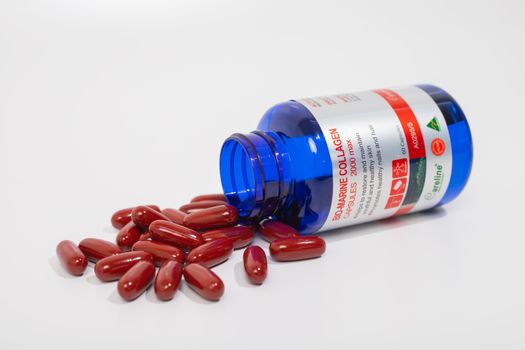
- Capsules/Pills: Convenient for on-the-go consumption, pre-dosed for ease. May require taking several capsules to reach an effective dose.
- Liquids: Pre-mixed liquid collagen shots or bottles. Often flavored and easy to consume, but can be more expensive per serving.
- Gummies: A tasty and convenient option, but often contain added sugars and lower collagen doses per serving.
Key Considerations When Buying
With so many options, how do you choose the best collagen supplement for you? Here are crucial factors:
- Quality and Purity: Look for brands that offer third-party testing for heavy metals and contaminants. Certifications like "Grass-fed" (for bovine) or "Wild-caught" (for marine) indicate higher quality sourcing.
- Hydrolyzed Peptides: For general skin and joint benefits, hydrolyzed collagen (peptides) is generally recommended due to its superior absorption.
- Targeted Benefits: If your primary goal is joint pain relief from osteoarthritis, consider a product with undenatured Type II collagen. For skin, hair, and nails, Type I and III are ideal.
- Added Ingredients: Some collagen supplements include complementary ingredients like Vitamin C (essential for collagen synthesis), hyaluronic acid (for skin hydration and joint lubrication), or biotin (for hair and nails). These can enhance the overall benefits.
- Flavor and Mixability: If you plan to mix it into drinks, an unflavored, easily dissolvable powder is often preferred.
- Dosage: Pay attention to the serving size. For hydrolyzed collagen, typical effective doses range from 10-20 grams per day. For undenatured Type II, it’s much lower (e.g., 40 mg).
- Brand Reputation: Choose reputable brands with transparent sourcing and manufacturing practices.
Does collagen have side effects?
Collagen supplements are generally well tolerated. Some people notice mild bloating, fullness or heartburn, especially at higher doses, so starting low can help. Collagen is made from animal sources such as fish, shellfish, eggshell membrane or cattle, so check the source if you have a food allergy. If you have kidney disease or take regular medication, check with your doctor before adding any protein supplement.
How to Incorporate Collagen into Your Daily Routine
Consistency is paramount when it comes to experiencing the full benefits of collagen. Integrating it seamlessly into your daily routine is key to long-term success. Here’s how to do it effectively:
Dosage Recommendations
The optimal dosage of collagen can vary depending on the type of collagen, your specific health goals, and individual response. However, general guidelines exist:
- For Skin, Hair, and Nails (Hydrolyzed Collagen): Most studies showing benefits for skin elasticity, hydration, and wrinkle reduction use doses ranging from 2.5 grams to 10-15 grams per day. Many people find 10-20 grams per day to be effective for comprehensive beauty benefits.
- For Joint Health (Hydrolyzed Collagen): Doses between 10-15 grams per day are commonly used in studies demonstrating improvements in joint pain and mobility.
- For Joint Health (Undenatured Type II Collagen): This form is effective at much lower doses, typically 40 mg per day.
It’s always wise to start with a lower dose and gradually increase it to assess your body’s response. Always follow the specific dosage instructions on your chosen supplement’s label.
Best Time to Take It
There is no definitive “best” time to take collagen, as its benefits are cumulative and depend on consistent intake rather than timing. Some people prefer:
Photo by Madalina Enache on Pexels