This post contains affiliate links. If you purchase through these links, I may earn a commission at no extra cost to you.
Quick answer: The three metabolic body types are ectomorph (naturally lean, fast metabolism, struggles to gain weight), mesomorph (athletic build, gains muscle easily, moderate metabolism), and endomorph (softer build, slower metabolism, stores fat easily). Most people are a blend of two types rather than purely one. You can identify your type by looking at your natural body shape, how easily you gain or lose weight, and how your body responds to exercise.
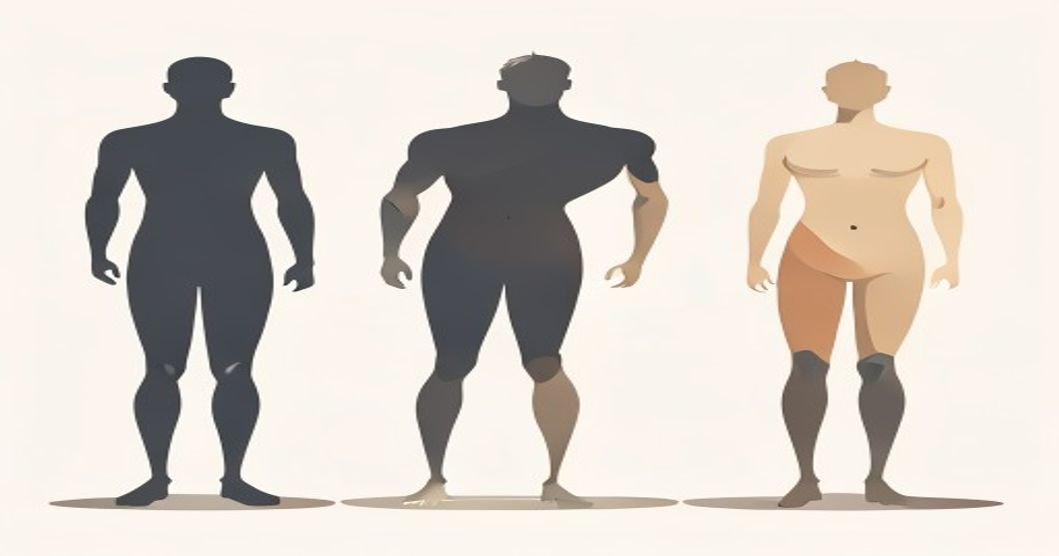
You have probably heard someone say “I am just built differently.” Maybe you have said it yourself.
It turns out there is some truth behind that feeling. The concept of metabolic body types, or somatotypes, has been around since the 1940s when psychologist William Sheldon proposed that people fall into three basic body categories. While his original theory has been largely debunked, the basic idea that people have different natural body compositions and metabolic tendencies still holds up in practical fitness and nutrition circles.
Understanding your metabolic type can help you tailor your diet and exercise plan to work with your body instead of against it. Here is a breakdown of the three types, how to figure out which one you are, and what to eat for each.
Table of contents
- The 3 metabolic types explained
- Ectomorph: the naturally lean type
- Mesomorph: the athletic type
- Endomorph: the slower metabolism type
- How to determine your type
- Eating for your metabolic type
- Does metabolic type dieting actually work?
- Frequently asked questions
the 3 metabolic types explained
The somatotype theory categorizes people into three groups based on their natural body composition, frame size, and how their bodies respond to food and exercise.
Most people are not purely one type. You are probably a blend. But one type usually dominates, and knowing which one helps you make smarter decisions about nutrition and training.
ectomorph: the naturally lean type
Ectomorphs are the people everyone envies at all-you-can-eat buffets. They have narrow frames, long limbs, and fast metabolisms. They can eat large amounts of food without gaining much weight.
Physical characteristics:
- Narrow shoulders and hips
- Thin wrists and ankles
- Low body fat naturally
- Flat chest and minimal muscle definition
- Long arms and legs relative to torso
Metabolic traits:
- Fast resting metabolic rate
- Difficulty gaining weight, whether fat or muscle
- High carbohydrate tolerance
- Quick recovery from exercise but lower strength potential
Common challenges: Ectomorphs often struggle to build muscle mass. They need to eat significantly more calories than they think and focus on progressive overload in strength training. Cardio should be limited if the goal is weight gain.

Best diet for ectomorphs: Higher carbohydrate intake (55-60 percent of calories), moderate protein (0.8-1 gram per pound of body weight), and moderate fat (20-25 percent). Eat frequently. Five to six meals per day is not overkill for an ectomorph trying to gain weight. Calorie-dense foods like nuts, nut butters, dried fruit, whole milk, and olive oil are your friends.
mesomorph: the athletic type
Mesomorphs are the genetic lottery when it comes to fitness. They have naturally athletic builds, gain muscle easily, and lose fat without too much struggle.
Physical characteristics:
- Broad shoulders and narrow waist
- Medium to large bone structure
- Natural muscle definition
- Rectangular or V-shaped torso
- Medium frame with balanced proportions
Metabolic traits:
- Efficient metabolism that responds well to both diet and exercise
- Gains muscle relatively easily
- Loses fat with moderate calorie restriction
- Good balance of strength and endurance
Common challenges: Mesomorphs can get complacent because their bodies respond well to almost anything. The risk is relying on genetics alone and neglecting proper nutrition or recovery. They also tend to gain weight if they stop training and keep eating the same amount.

Best diet for mesomorphs: A balanced split works well. Around 40-50 percent carbs, 30 percent protein, and 20-30 percent fat. Mesomorphs do well with carb cycling, eating more carbs on training days and fewer on rest days. They respond well to both strength training and cardio.
endomorph: the slower metabolism type
Endomorphs have softer, rounder builds and slower metabolisms. They gain weight easily, both fat and muscle, and struggle to lose fat once it is there.
Physical characteristics:
- Wider hips and shoulders
- Thicker bone structure
- Higher body fat percentage naturally
- Shorter arms and legs relative to torso
- Stocky or thick build
Metabolic traits:
- Slower resting metabolic rate
- Easily gains weight from small calorie surpluses
- Lower carbohydrate tolerance
- Strong and powerful but struggles with endurance
Common challenges: Endomorphs need to be more disciplined with their diet than other types. A small calorie surplus that would not affect an ectomorph can lead to noticeable weight gain. They also tend to be more insulin resistant, which means carbohydrates are more likely to be stored as fat.
Best diet for endomorphs: Lower carbohydrate intake (30-40 percent of calories), higher protein (30-35 percent), and moderate to high fat (30-35 percent). Focus on complex carbs like vegetables and whole grains rather than refined carbs. Meal timing matters more for endomorphs. Eating most of your carbs around workouts when your body can use them for energy rather than storing them as fat is a smart strategy.

how to determine your type
Here is a simple self-assessment to help you figure out your dominant metabolic type:
Look at your wrist. Wrap your thumb and middle finger around your opposite wrist. If they overlap, you likely have a small frame (ectomorph). If they just touch, medium frame (mesomorph). If they do not touch, larger frame (endomorph).
Think about your teenage years. Were you naturally lean and lanky? Likely ectomorph. Athletic and muscular? Mesomorph. Soft and rounder? Endomorph.
Consider how your body responds to food. Can you eat a lot without gaining weight? Ectomorph. Do you gain and lose weight relatively easily with diet changes? Mesomorph. Does every extra snack show up on the scale within a day? Endomorph.
Think about exercise. Do you struggle to build muscle no matter what? Ectomorph. Does your body respond quickly to any training program? Mesomorph. Do you gain strength easily but struggle to lose fat? Endomorph.
Remember, most people are blends. You might be an ectomorph-mesomorph or a mesomorph-endomorph. The goal is not to put yourself in a rigid box. It is to understand your natural tendencies so you can work with them.
eating for your metabolic type
Here is a quick reference for how each type should approach nutrition:
Ectomorphs: Eat more than you think you need. Prioritize calorie-dense foods. Do not skip meals. Heavy strength training with minimal cardio. Aim for a calorie surplus of 300 to 500 calories above maintenance.
Mesomorphs: A balanced approach works best. Adjust carbs based on activity level. Mix strength training with moderate cardio. You can be flexible with your diet and still see results.
Endomorphs: Watch your carb intake carefully. Prioritize protein and vegetables. Strength training is essential for boosting your metabolic rate. Limit processed carbs and sugary drinks. Consider intermittent fasting if it helps you control your calorie intake.
common mistakes people make with metabolic typing
Metabolic typing is a useful starting point, but people tend to misuse it in a few predictable ways that can actually hold them back from making progress.
Using it as an excuse. “I am an endomorph, so I will always be overweight.” No, you will not. Your body type influences how easily you gain or lose weight, but it does not determine your destiny. Plenty of endomorphs achieve lean, athletic physiques through consistent training and nutrition. It just takes more discipline than it does for a mesomorph.
Ignoring the fundamentals. No matter your type, you still need to eat enough protein, sleep well, and stay active. Metabolic typing does not replace these basics. It just helps you prioritize which ones to focus on first.
Treating it as permanent. Your body composition changes over time. An ectomorph who spends five years lifting heavy weights will not look or metabolically function the same way they did at the start. Training, diet, age, and lifestyle all shift how your body processes food. Reassess your approach every few months.
Overcomplicating nutrition. You do not need a different meal plan for every day of the week based on your type. Start with the basic macro split for your type, track your results for four to six weeks, and adjust from there. Simple beats perfect every time.
Comparing yourself to others. Your friend who is a mesomorph will respond differently to the same diet and workout plan you follow. That does not mean you are doing something wrong. It means your body is different. Focus on your own progress, not someone else’s starting point.
does metabolic type dieting actually work?
Here is the thing about metabolic typing. The original somatotype theory from the 1940s was tied to pseudoscientific claims about personality and behavior that have been thoroughly debunked. Sheldon believed body type determined character traits, which was never supported by evidence.
However, the practical observation that people have different natural body compositions and respond differently to diet and exercise is absolutely real. Modern research supports this. Genetics play a significant role in body composition, metabolic rate, and how your body processes different macronutrients.
The concept of metabolic typing in fitness is useful as a framework, not a rigid classification system. Use it to guide your approach, but do not treat it as destiny. Your habits, consistency, and effort matter far more than your natural body type.
No matter your type, the fundamentals still apply: eat whole foods, get enough protein, stay active, sleep well, and manage stress. Your metabolic type just tells you which levers to pull first. The people who see the best results are the ones who combine self-awareness with consistent effort over time.
Frequently asked questions
What are the 3 metabolic types?
The three metabolic body types are ectomorph (naturally lean with a fast metabolism), mesomorph (athletic build that gains muscle easily), and endomorph (softer build with a slower metabolism that stores fat easily). Most people are a blend of two types rather than purely one.
How do I know my metabolic type?
Look at your natural body shape, how easily you gain or lose weight, and how your body responds to exercise. Ectomorphs are naturally lean and struggle to gain weight. Mesomorphs are athletic and respond well to training. Endomorphs gain weight easily and struggle to lose fat. The wrist test and reflecting on your teenage body can also help.
Is metabolic type dieting scientifically proven?
The original somatotype theory from the 1940s has been debunked, particularly its claims about personality. However, the practical observation that people have different body compositions and respond differently to diet and exercise is supported by modern genetics and nutrition research. Use metabolic typing as a flexible framework, not a rigid rule.
Can you change your metabolic type?
You cannot change your bone structure or genetics, but you can significantly change your body composition through diet and exercise. An ectomorph can build muscle to look more mesomorphic. An endomorph can lose fat and build muscle to achieve a more athletic appearance. Your habits matter more than your starting point.
Which metabolic type is best for athletes?
It depends on the sport. Mesomorphs have an advantage in sports requiring a balance of strength and speed. Ectomorphs excel in endurance sports like long-distance running. Endomorphs often perform well in strength sports like powerlifting and strongman. Each type has its athletic strengths.
Medical disclaimer: This article is for informational purposes only and does not constitute medical or nutritional advice. Individual needs vary based on health conditions, activity levels, and personal goals. Always consult a qualified healthcare professional or registered dietitian before making significant changes to your diet.
About the author: The GetLeanPulse team researches and writes evidence-based content on nutrition, weight loss, and healthy living. Our goal is to cut through the noise and give you practical, science-backed advice you can actually use. Have a question or topic suggestion? Reach out through our contact page.