Why Home Workouts Are Your Secret Weapon for Fat Loss
The idea that you need a gym to get in shape is a persistent myth. In reality, home workouts offer a myriad of advantages, making them an incredibly powerful tool for burning fat and transforming your body:- Unmatched Convenience: No travel time, no waiting for equipment, no specific operating hours. You can work out whenever and wherever suits your schedule – before work, during lunch, or late at night.
- Cost-Effective: Say goodbye to hefty gym membership fees, personal trainer costs, and specialized gear. Most effective fat-burning exercises require little to no equipment.
- Privacy and Comfort: For many, the gym environment can be intimidating. Working out at home allows you to focus on your body and form without feeling self-conscious, creating a comfortable and motivating space.
- Flexibility and Variety: Your home gym is always open, offering endless possibilities for exercise types. You can easily switch between cardio, strength, and HIIT routines based on your mood and goals.
- Consistency is Key: The easier it is to start a workout, the more likely you are to stick with it. Home workouts remove many barriers to consistency, which is the cornerstone of sustainable fat loss.
Understanding Fat Burning: The Science Behind Getting Lean
Before we jump into specific exercises, it’s crucial to understand how your body actually burns fat. Fat loss is fundamentally about creating a caloric deficit: consuming fewer calories than your body expends. However, exercise plays a vital role in optimizing this process.The Calorie Deficit Principle
Your body needs energy (calories) to perform all its functions, from breathing and thinking to exercising. If you consistently provide your body with fewer calories than it needs, it will start to tap into its stored energy reserves – primarily fat – to make up the difference. This is the bedrock of fat loss.Metabolism and Muscle Mass
Your metabolism is the rate at which your body burns calories. A higher metabolism means you burn more calories at rest. One of the most effective ways to boost your metabolism is by increasing your muscle mass. Muscle tissue is metabolically active, meaning it burns more calories than fat tissue, even when you’re not exercising. This is why strength training, even with just your body weight, is incredibly important for long-term fat loss.EPOC: The Afterburn Effect
Exercise Post-exercise Oxygen Consumption (EPOC), often called the “afterburn effect,” refers to the increased rate of oxygen intake following strenuous activity. During this period, your body continues to burn calories at an elevated rate to restore itself to its pre-exercise state. High-intensity interval training (HIIT) and intense strength training are particularly effective at generating a significant EPOC, meaning you continue to burn calories for hours after your workout is over.Hormonal Balance
Regular exercise also helps to regulate hormones that influence appetite, fat storage, and energy levels. For example, it can improve insulin sensitivity, which is crucial for preventing fat storage, and reduce levels of cortisol, a stress hormone that can contribute to belly fat. By understanding these principles, you can strategically design your home workouts to not only burn calories during exercise but also to optimize your body’s fat-burning machinery 24/7.
Before You Start: Essential Home Workout Preparations
To ensure your home workouts are safe, effective, and sustainable, a few preparatory steps are crucial.1. Consult Your Doctor
Always consult with a healthcare professional before starting any new exercise program, especially if you have underlying health conditions or haven’t been active for a while.2. Create Your Workout Space
Designate a clear, safe area in your home. Ensure there’s enough room to move freely without hitting furniture. A non-slip surface is ideal, and a mat can provide cushioning for floor exercises.3. Warm-Up is Non-Negotiable
A proper warm-up prepares your muscles and cardiovascular system for activity, reducing the risk of injury. Aim for 5-10 minutes of light cardio and dynamic stretches. Examples include:- Jumping jacks
- High knees
- Arm circles
- Leg swings
- Torso twists
4. Focus on Form, Not Speed
Incorrect form can lead to injury and reduce the effectiveness of an exercise. Watch videos, use mirrors, and prioritize correct technique over rushing through reps. If an exercise causes pain, stop immediately.5. Hydration and Nutrition
Stay well-hydrated throughout the day, especially before, during, and after your workouts. Fuel your body with nutrient-dense foods to support energy levels and recovery. Remember, nutrition is at least 80% of the fat loss equation.6. Listen to Your Body
It’s good to challenge yourself, but know the difference between muscle fatigue and pain. Rest when needed, and don’t push through sharp discomfort. Recovery is just as important as the workout itself.What equipment do you need for at-home fat loss?
You do not need a gym to do effective at-home fat loss exercises. Your body weight is enough to start, and every move in this guide can be scaled up or down.
If you want to progress without buying machines, three inexpensive tools cover most needs:
- Resistance bands: add load to squats, glute bridges, rows and push-ups, and take up almost no space.
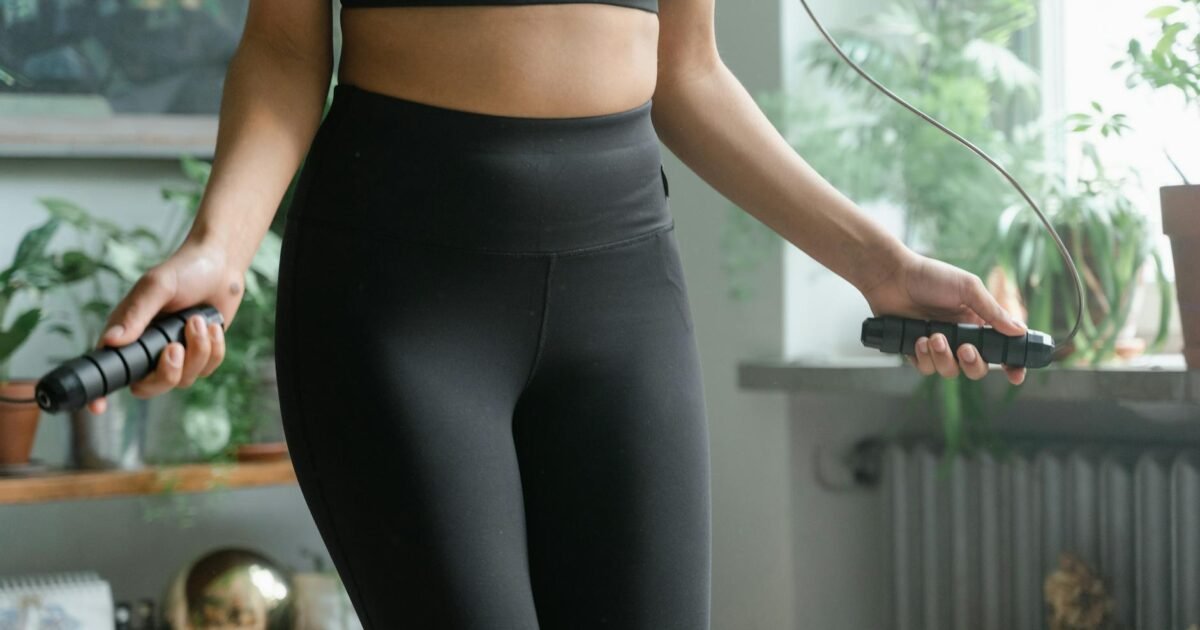
- Jump rope: a compact option for cardio intervals once your joints are used to impact.
- Light to moderate dumbbells or one kettlebell: useful when bodyweight moves start to feel easy, so you can keep adding resistance over time.
A mat for floor work and enough clear space to move safely are the only other things you need.
What are the best types of at-home fat loss exercises?
To effectively burn fat at home, your workout routine should incorporate a blend of different exercise types. We’ll focus on three main pillars: High-Intensity Interval Training (HIIT), Strength Training (Bodyweight), and Cardiovascular Endurance.Pillar 1: High-Intensity Interval Training (HIIT)
HIIT is a powerhouse for fat burning. It involves short bursts of intense exercise followed by brief periods of rest or low-intensity activity. It raises your heart rate quickly and packs a lot of work into a short session. The extra calories burned after exercise (EPOC) are real but modest, so treat them as a bonus rather than the main reason to do HIIT. **How to structure HIIT:** * **Work Period:** 20-60 seconds of maximum effort. * **Rest/Recovery Period:** 10-60 seconds of complete rest or low-intensity movement. * **Rounds:** Repeat for 4-8 rounds. * **Total Workout:** 15-30 minutes, including warm-up and cool-down. **Key HIIT Exercises (Bodyweight):** 1. Burpees: The ultimate full-body exercise. * Start standing, squat down, place hands on floor, kick feet back into a plank. * Perform a push-up (optional). * Jump feet forward to hands, then explosively jump up, clapping hands overhead. * Modification: Step back into plank, step forward, stand up without jump. 2. Mountain Climbers: Core and cardio in one. * Start in a high plank position. * Alternate bringing knees towards chest, as if running in place. Keep hips stable. 3. Jump Squats: Explosive lower body power. * Start with feet shoulder-width apart, squat down as if sitting in a chair. * Explode upwards, jumping off the floor, landing softly back into a squat. 4. High Knees: Dynamic cardio. * Run in place, bringing knees as high as possible towards your chest. Pump your arms. 5. Butt Kicks: Targets hamstrings and glutes. * Run in place, focusing on kicking your heels back to touch your glutes. 6. Jumping Jacks: Classic full-body cardio. * Start standing with feet together, arms at sides. * Jump feet out wide while swinging arms overhead. * Jump feet back together while bringing arms down. 7. Plank Jacks: Core stability with cardio. * Start in a high plank position. * Jump both feet out wide (like a jumping jack) then back together, keeping core tight. **Sample HIIT Circuit (20 minutes):** * Warm-up: 5 minutes light cardio/dynamic stretches. * Circuit: Perform each exercise for 40 seconds, followed by 20 seconds rest. Complete 3-4 rounds. 1. Burpees 2. Mountain Climbers 3. Plank Jacks 4. Jump Squats 5. High Knees * Cool-down: 5 minutes stretching.How a beginner HIIT block works at home: after a 5 to 10 minute warm-up, do one exercise at a hard but controlled effort for 20 to 40 seconds, then rest or move gently for 10 to 20 seconds. Repeat for 4 to 8 rounds before switching exercises. Keep the whole session to about 15 to 30 minutes, and if you are new to exercise, start with longer rests and lower-impact moves (marching high knees instead of jumping jacks, for example).
Pillar 2: Strength Training (Bodyweight)
Building muscle is paramount for fat loss because it boosts your resting metabolism. Bodyweight exercises are incredibly versatile and effective for building strength and endurance. They also improve functional fitness and balance. **Key Bodyweight Strength Exercises:** 1. Squats: King of lower body exercises. * Stand feet shoulder-width apart. * Lower hips as if sitting in a chair, keeping chest up and back straight. * Go as deep as possible while maintaining form. Push through heels to stand. * Variations: Sumo squats (wider stance), jump squats (HIIT), pulse squats, single-leg squats (pistol squats for advanced). 2. Lunges: Targets quads, hamstrings, and glutes, improves balance. * Step one leg forward, lowering hips until both knees are bent at 90 degrees. * Front knee over ankle, back knee hovering above floor. Push back to start. * Variations: Forward lunges, reverse lunges, walking lunges, lateral lunges, jump lunges (HIIT). 3. Push-Ups: Excellent for chest, shoulders, triceps, and core. * Start in a high plank, hands slightly wider than shoulder-width. * Lower chest towards floor, keeping body in a straight line. Push back up. * Modifications: On knees, incline push-ups (hands on elevated surface like a chair). * Progression: Decline push-ups (feet elevated), clap push-ups. 4. Plank: Core stability and strength. * Forearm plank: Forearms on floor, elbows under shoulders, body in a straight line from head to heels. Engage core. * High plank: Hands on floor, arms straight, same straight body line. * Variations: Side plank, plank shoulder taps, plank hip dips. 5. Glute Bridges: Activates glutes and hamstrings, strengthens lower back. * Lie on back, knees bent, feet flat on floor close to glutes. * Lift hips off floor until body forms a straight line from shoulders to knees. Squeeze glutes. * Variations: Single-leg glute bridge. 6. Tricep Dips (using a chair): Isolates triceps. * Sit on edge of a sturdy chair, hands gripping edge next to hips. * Slide hips off chair, extend legs (bent for easier, straight for harder). * Lower body by bending elbows to 90 degrees. Push back up. 7. Inverted Rows (using a sturdy table or low bar): Targets back and biceps. * Lie on your back under a sturdy table or bar. Grab edge with overhand grip, hands shoulder-width. * Hang with straight arms, body in a straight line. Pull chest towards table/bar. * Modification: Bend knees to make it easier. 8. Supermans: Strengthens posterior chain (back, glutes, hamstrings). * Lie face down, arms extended overhead, legs straight. * Simultaneously lift arms, chest, and legs off the floor. Hold briefly, lower with control. **Structuring Bodyweight Strength Workouts:** * **Full Body Focus:** Aim for 3-4 strength workouts per week, hitting all major muscle groups. * **Sets and Reps:** For muscle growth and strength, aim for 3-4 sets of 8-15 repetitions per exercise. * **Progressive Overload:** To keep getting stronger, you need to challenge your muscles. * Increase reps or sets. * Decrease rest time between sets. * Perform harder variations of exercises. * Slow down the tempo (e.g., 3 seconds down, 1 second pause, 1 second up).Pillar 3: Cardiovascular Endurance
While HIIT and strength training are powerful, traditional cardio still has a place in your fat-burning routine. It improves heart health, endurance, and burns calories. For home workouts, you can still get your heart rate up effectively without a treadmill. **Key Home Cardio Exercises (No Equipment):** 1. Jumping Jacks: (As mentioned in HIIT, but also great for steady-state cardio). 2. High Knees & Butt Kicks: (Also useful for steady-state). 3. Shadow Boxing: A fantastic full-body workout. Throw punches (jabs, crosses, hooks, uppercuts) and incorporate footwork (shuffles, pivots). It’s dynamic and engages your core. 4. Dancing: Put on your favorite music and just move! Free-form dancing can be a surprisingly effective and fun cardio workout. 5. Stair Climbing: If you have stairs, repeatedly walking or running up and down them is an excellent cardio workout. 6. Jogging in Place: Simple, effective, and gets your heart rate up. Focus on good posture and high knee drive. 7. Jump Rope (if you have one and space): One of the most efficient cardio exercises. Improves coordination and agility. **Structuring Cardio Workouts:** * **Duration:** Aim for 20-45 minutes per session. * **Intensity:** Moderate intensity, where you can talk but not sing. * **Frequency:** 2-3 times per week, or integrate into your HIIT sessions.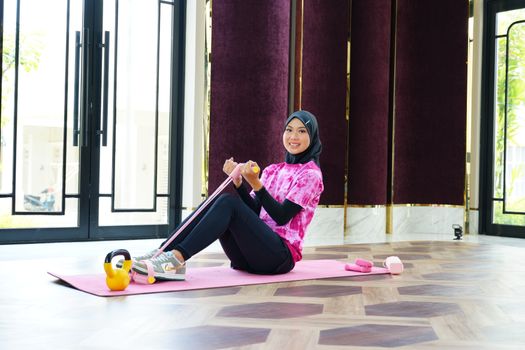
The Role of Core-Focused Exercises in Fat Loss
While spot reduction (losing fat from a specific area) is a myth, strengthening your core muscles is vital for overall fitness, posture, injury prevention, and enabling you to perform other exercises more effectively. A strong core supports your spine and helps transfer power throughout your body. **Key Core Exercises:** 1. Plank Variations: (As mentioned previously: standard plank, side plank, plank shoulder taps, plank hip dips). 2. Crunches: * Lie on back, knees bent, feet flat. Place hands behind head (don’t pull neck). * Engage core, lift head and shoulders off floor. Focus on contracting abs. 3. Bicycle Crunches: * Lie on back, hands behind head, legs in tabletop position. * Bring one elbow towards opposite knee while extending the other leg. Alternate sides. 4. Leg Raises: * Lie on back, hands under glutes (optional for lower back support). * Keep legs straight, slowly lower them towards floor without arching back. Lift back up. 5. Russian Twists: * Sit on floor, knees bent, feet off ground (optional). Lean back slightly, keep back straight. * Hold hands together, twist torso side to side, tapping hands on floor next to hips. 6. Bird Dog: Improves core stability and balance. * Start on all fours. Extend opposite arm and leg simultaneously, keeping core tight and back flat. Return to start, alternate. Incorporate 1-2 core exercises into your warm-up or cool-down, or dedicate a short 10-15 minute session to core work 2-3 times a week.How do you plan an at-home fat loss workout week?
Combining these exercise types effectively is key to maximizing fat loss and avoiding plateaus. Here’s how you can structure a balanced and progressive weekly plan.Principles for Program Design:
- Consistency: Aim for 4-6 workout sessions per week.
- Variety: Mix HIIT, strength, and cardio to keep your body guessing and prevent boredom.
- Progression: Continuously challenge yourself by increasing reps, sets, duration, intensity, or trying harder variations.
- Recovery: Include rest days and prioritize sleep. Your muscles grow and repair during rest.
Sample Weekly Workout Plan (Example):
This is a template; feel free to adjust based on your fitness level and schedule. * Monday: Full Body Strength (45-60 minutes) * Warm-up: 5-10 minutes * Workout: 3-4 sets of 10-15 reps for: Squats, Push-Ups, Lunges (per leg), Glute Bridges, Tricep Dips, Plank (hold 30-60 sec). * Cool-down: 5-10 minutes stretching. * Tuesday: HIIT (20-30 minutes) * Warm-up: 5 minutes * Workout: HIIT circuit (e.g., Burpees, Mountain Climbers, Jump Squats, High Knees) – 40 sec work / 20 sec rest x 4 rounds. * Cool-down: 5 minutes stretching. * Wednesday: Active Recovery / Core Focus (20-30 minutes) * Light walk, gentle yoga/stretching, or dedicated core workout (Crunches, Bicycle Crunches, Leg Raises, Russian Twists – 3 sets of 15-20 reps). * Thursday: Full Body Strength (45-60 minutes) * Warm-up: 5-10 minutes * Workout: Focus on different variations or slightly different exercises than Monday. E.g., Sumo Squats, Incline Push-Ups, Reverse Lunges, Single-Leg Glute Bridges, Superman, Side Plank. * Cool-down: 5-10 minutes stretching. * Friday: Cardio Endurance (30-45 minutes) * Warm-up: 5 minutes * Workout: Continuous activity like shadow boxing, high knees/butt kicks, dancing, or stair climbing. Maintain moderate intensity. * Cool-down: 5 minutes stretching. * Saturday: HIIT or Active Recovery (Optional) * Another HIIT session or a longer active recovery session (e.g., brisk walk, bike ride if you have one). * Sunday: Rest Day * Complete rest, focus on recovery, sleep, and nutrition.Implementing Progressive Overload at Home:
This is critical for continued progress.- Increase Reps/Sets: If you can easily do 3 sets of 10 squats, try 3 sets of 12, or 4 sets of 10.
- Decrease Rest Times: Shorten the break between sets from 60 seconds to 45 or 30 seconds.
- Increase Time Under Tension: Slow down the eccentric (lowering) phase of an exercise. For a squat, take 3-4 seconds to lower down.
- Add Explosiveness: Turn regular squats into jump squats, or lunges into jump lunges.
- Use Unilateral Movements: Single-leg squats or single-arm push-ups (if advanced) significantly increase the challenge.
- Incorporate Instability: If you have a cushion or pillow, try standing on it for balance challenges during squats or lunges.
- Add Minimal Equipment (Optional): If you find yourself consistently needing more, consider resistance bands (for squats, glute bridges, push-ups) or a pair of adjustable dumbbells. These are small investments that can significantly expand your home workout capabilities.
The Crucial Role of Nutrition in Fat Loss
No matter how perfect your home workout routine is, you cannot out-exercise a bad diet. Nutrition is the cornerstone of fat loss.Key Nutritional Principles:
- Calorie Deficit: This remains the fundamental principle. You must consume fewer calories than you burn. Use an online calculator to estimate your daily calorie needs for fat loss.
- Prioritize Protein: Protein is vital for muscle repair and growth, which is essential for boosting metabolism. It also promotes satiety, helping you feel full longer. Aim for 0.7-1 gram of protein per pound of body weight.
- Eat Whole Foods: Focus on lean proteins, abundant vegetables, fruits, and whole grains. Minimize processed foods, sugary drinks, and excessive unhealthy fats.
- Healthy Fats: Don’t fear fats entirely. Avocados, nuts, seeds, and olive oil provide essential fatty acids and can aid satiety.
- Hydration: Drink plenty of water throughout the day. It helps with metabolism, reduces appetite, and supports overall bodily functions.
- Fiber Intake: Foods rich in fiber (vegetables, fruits, whole grains, legumes) aid digestion and promote fullness.
Mindset & Consistency: Your Long-Term Success Strategy
Starting a home workout routine is easy; sticking to it is where the real challenge lies. Cultivating the right mindset and strategies for consistency will dictate your long-term success.1. Set Realistic Goals
Don’t expect overnight miracles. Fat loss is a journey, not a sprint. Set small, achievable weekly or monthly goals (e.g., “I will complete 4 workouts this week,” “I will lose 1-2 pounds this month”).2. Track Your Progress
Monitor your workouts (reps, sets, duration, intensity), take progress photos, measure inches, and weigh yourself periodically. Seeing tangible results is incredibly motivating. Don’t just rely on the scale; body composition changes are often more telling.3. Find Your “Why”
Why do you want to burn fat and get fit? Is it for health, energy, confidence, or to be a better role model? Connect with this deeper motivation, and remind yourself of it when motivation wanes.4. Schedule Your Workouts
Treat your home workouts like important appointments you can’t miss. Block out specific times in your calendar.5. Celebrate Small Wins
Acknowledge your efforts and celebrate milestones, no matter how small. Did you complete an extra rep? Did you stick to your plan all week? Give yourself credit!6. Overcome Plateaus
At some point, your progress might slow down. This is normal. When a plateau hits, reassess your strategy:- Are you consistently applying progressive overload?
- Is your nutrition still on point?
- Are you getting enough sleep and managing stress?
- Could you try a new workout routine or exercise variations?
7. Don’t Seek Perfection, Seek Progress
Life happens. There will be days you miss a workout or make less-than-ideal food choices. Don’t let one slip-up derail your entire journey. Acknowledge it, learn from it, and get back on track with the next meal or workout.Common Mistakes to Avoid in Your Home Fat-Burning Journey
Even with the best intentions, certain pitfalls can hinder your progress. Be aware of these common mistakes: 1. Neglecting Proper Form: Risk of injury and ineffective workouts. Always prioritize form over speed or number of reps. 2. Lack of Progressive Overload: If you do the same workout with the same intensity every time, your body will adapt, and results will stall. 3. Ignoring Nutrition: As emphasized, exercise alone won’t get you to your fat loss goals without a calorie deficit. 4. Overtraining and Under-recovering: More is not always better. Your body needs rest to repair and grow. Chronic fatigue and poor performance are signs of overtraining. 5. Inconsistency: Sporadic workouts yield sporadic results. Regularity is paramount. 6. Impatience: Fat loss takes time. Trust the process, stay consistent, and celebrate the small victories along the way. 7. Comparing Yourself to Others: Your fitness journey is unique. Focus on your own progress and avoid comparison, which can be demotivating. 8. Underestimating Bodyweight: Many beginners think bodyweight isn’t “hard enough.” With proper form, progressive overload, and high intensity, bodyweight exercises can be incredibly challenging and effective.Conclusion: Your Home, Your Gym, Your Success
Burning fat and achieving your fitness goals doesn’t require a gym membership or expensive equipment. Your home provides the perfect environment for a powerful, effective, and sustainable fitness journey. By embracing the principles of High-Intensity Interval Training, bodyweight strength training, and consistent cardio, coupled with smart nutrition and a resilient mindset, you have all the tools you need to sculpt the body you desire. Remember, consistency is your most powerful asset. Start small, focus on proper form, gradually increase your intensity, and celebrate every step of your progress. Get ready to transform your body, boost your energy, and embrace a healthier, leaner you – all from the comfort and convenience of your home. Your journey to a leaner, stronger you starts now. For more expert advice, workout plans, and nutrition tips, keep exploring GetLeanPulse.com!Photo by MART PRODUCTION on Pexels